What Is a Circular Saw Used For?
A circular saw is used to cut wood and sheet goods in straight lines, such as crosscuts, rip cuts, and bevel cuts. The right blade and setup depend on the material and cut.
On this page (6 sections)
A circular saw is used to make straight cuts in wood and sheet goods, including crosscuts, rip cuts, and bevel cuts. It works well for breaking down boards and plywood when you support the material and guide the saw along a marked line or straightedge.
The blade spins in a circular path beneath the saw's base plate. The saw moves through the material while the base rides on its surface, which makes it portable for jobs where bringing the work to a stationary saw isn't practical.
What jobs is a circular saw used for?
A circular saw handles straight cuts across or along wood, plus angled cuts when the saw supports bevel adjustments. It's common for framing, home repairs, shelving, and rough sizing of sheet goods.
A crosscut goes across a board's width. A rip cut follows its length, and a bevel cut tilts the blade away from a square 90-degree cut.
The guide to how to rip a board with a circular saw explains how to set up a straight rip. For a smaller project, a straightedge or guide can help keep the saw on course.
Can a circular saw cut plywood?
Yes, a circular saw can cut plywood into smaller panels or parts. A long straightedge helps guide the base plate, while full support under the panel helps prevent the offcut from sagging or pinching the blade.
Use a blade suited to the cut and material. Set up the work so the blade won't strike a support, and keep the offcut from closing against the blade as the cut finishes.
See how to cut plywood with a circular saw for panel support and guide setup. If you need a long, repeatable straight edge, compare that approach with making a circular saw guide.
Can you use a circular saw for bevel cuts?
Yes, a circular saw can make bevel cuts when its base allows the blade to tilt. The bevel setting changes the angle of the cut, so the saw may not cut as deep as it does at 90 degrees.
Check the saw's instructions for its bevel range and stops. Secure the work and make a test cut on scrap if the angle must fit another piece.
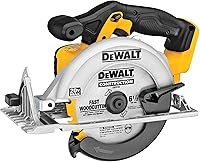
The DeWalt DCS391B has a stated 0 to 50 degree bevel capacity. Its 20V battery is sold separately, so account for that if you don't already have a compatible one.
What materials can a circular saw cut?
A circular saw can cut wood and wood-based sheet goods with a suitable blade. Don't assume a wood blade is right for metal, masonry, plastic, or other materials; use only a blade and saw approved for the material.
Some saws are made for specific non-wood materials, but the blade, speed, and safety setup must match. Check the saw manual and blade instructions before changing materials.
For wood, choose a blade intended for the cut you want. A finer-tooth blade can help reduce splintering on some sheet goods, while a general-purpose blade can suit basic framing cuts.
When should you choose a different saw?
Choose another saw when the cut is curved, the stock is too thick for the saw's capacity, or you need a specialized finish. A jigsaw follows curves, while a table saw can guide repeated cuts on appropriately sized stock.
A circular saw can cut a thick post from more than one side if its depth is limited, but the cuts may not meet perfectly. Check whether a circular saw can cut a 4x4 post before choosing that method.
A track saw uses a guide rail to help control long, straight cuts, especially on sheet goods. Read what a track saw is and who needs one if panel accuracy is your main concern.
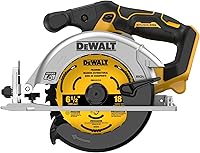
The DeWalt ATOMIC DCS571B is a compact 4-1/2 inch model with a bevel gear design for cutting 2x material at 90 degrees and 1x lumber at 45 degrees, according to DeWalt's stated capabilities. Its smaller blade size makes it a different option from a full-size saw, so check the job's required depth before choosing it.
How do you choose a circular saw for the job?
Choose a circular saw by matching its blade size and cutting depth to the material, then decide whether corded or battery power fits the work area. The saw's bevel range also matters if you need angled cuts.
A corded saw can work well near an outlet, while a battery saw gives you more freedom to move around. The corded versus cordless circular saw guide lays out those tradeoffs.
The DeWalt DWE575 is a corded 7-1/4 inch saw with a stated 2-9/16 inch depth of cut capacity. It also has a dust blower and an aluminum base, features that can help when following a marked line across wood.
For a battery option with a 6-1/2 inch blade, the DeWalt DCS391B has a 0 to 50 degree bevel capacity. For a compact choice, the DCS571B has a 4-1/2 inch blade and is designed for smaller cuts.
What safety steps matter when using a circular saw?
Use a circular saw only with the work secured, the correct blade installed, and the guard working freely. Wear eye and hearing protection, keep the cord or battery clear of the blade path, and follow the saw manual.
Support the material on both sides without placing a support where the blade will hit it. Keep hands away from the cut line, stand to one side of the blade, and wait for the blade to stop before setting the saw down.
Don't force the saw through a cut or reach under the work while the blade is moving. If a cut binds, release the trigger and let the blade stop before checking the setup.
Which circular saw use should you start with?
For straight cuts in boards or plywood, a circular saw is a practical portable choice. Pick a blade suited to the material, support the work, and use a marked line or guide for the cut.
Choose a full-size saw when the job needs its greater cutting depth, a compact saw for smaller cuts, or a track saw when guided panel cuts are the priority. To learn the basic setup and handling, follow our beginner's walkthrough for using a circular saw.
Frequently asked questions
What is a circular saw mainly used for?
A circular saw is mainly used to make straight cuts in wood, plywood, and other sheet goods. With the right blade and setup, it can make crosscuts across a board, rip cuts along its length, and bevel cuts at an angle.
Check the saw and blade instructions before cutting other materials.
Can a circular saw cut plywood?
Yes, a circular saw can cut plywood, and a straightedge can help guide a clean line. Support the panel so the offcut won't pinch the blade, set the depth according to the saw instructions, and use a blade intended for the material.
See our guide to cutting plywood with a circular saw.
Can a circular saw cut a 4x4?
It depends on the saw's cutting depth and the actual thickness of the post. Some cuts may require turning the post and cutting from more than one side, but that can leave misaligned edges.
Check the saw's depth at 90 degrees and consider another tool if one clean pass matters.
Is a circular saw good for beginners?
A circular saw can suit a beginner who needs portable straight cuts, provided they learn the tool's safety steps and practice on scrap wood. Secure the work, keep hands clear of the blade path, and wait for the blade to stop before setting the saw down.
Our beginner walkthrough covers setup and basic cuts.