How to Rip a Board with a Circular Saw
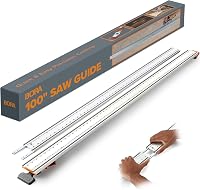
To rip a board with a circular saw, mark a straight line, support the board, set the blade just below the wood, and guide the saw steadily along the cut. Use a clamped straightedge or saw guide when you need a straighter edge.
On this page (9 sections)
- How do you rip a board with a circular saw step by step?
- How should you mark and measure a rip cut?
- How do you support the board and offcut?
- How do you keep a circular saw rip cut straight?
- How deep should the blade be for ripping?
- What should you do if the board is narrow?
- What common mistakes can spoil a rip cut?
- How do you choose between a straightedge and a saw guide?
- How to rip a board with a circular saw safely
To rip a board with a circular saw, mark the cut, support the board, set the blade just below the wood, and guide the saw steadily along the line. A clamped straightedge or compatible saw guide can help keep a long cut on track.
A rip cut runs along the board's length to make it narrower. Plan for the saw's base to stay flat, the offcut to move freely, and both sides of the cut to remain supported.
How do you rip a board with a circular saw step by step?
Measure, mark, support, set the blade, and follow the line without forcing the saw. Read your saw manual for its setup and safety instructions before starting.
- Measure the finished width and mark both ends of the board.
- Connect the marks with a straight line using a square or straightedge.
- Position stable supports so the blade won't hit them and the offcut won't pinch the kerf.
- Unplug the saw or remove its battery while setting up, then adjust the blade depth as the manual directs.
- Clamp a straightedge or guide in place if you are using one.
- Put on eye and hearing protection, start the saw clear of the wood, and let it reach full speed.
- Move the saw forward at a steady pace while keeping its base flat and your hands away from the cut path.
- Wait for the blade to stop before setting the saw down or moving the offcut.
Check that the blade's path is clear underneath before you start. Keep the cord or battery clear of the cut, and stand to one side of the saw rather than directly behind it.
How should you mark and measure a rip cut?
Measure the finished width from a straight reference edge, then mark both ends of the cut. A line drawn from one end only can drift if the board's edge is not straight.
Use a pencil and a straightedge to connect the marks. If the saw's blade sits to one side of its base, account for the base-to-blade distance when positioning a guide.
For repeated cuts, a stop block or a marked setup can reduce remeasuring. Check the first result before using that setting for more boards.
How do you support the board and offcut?
Support the board on a stable surface and leave room for the blade below the cut. The offcut should not drop, twist, or press inward on the blade as the saw advances.
Foam board, sawhorses with a suitable support surface, or a workbench setup can work if the saw's path stays clear. Arrange the supports before cutting, not while holding the saw.
Don't let the board hang unsupported at the end of the cut. That can cause it to break away, bind the blade, or pull the saw off its line.
How do you keep a circular saw rip cut straight?
Use a clamped straightedge or a guide made for your saw when the board needs a clean, straight edge. Keep the saw base pressed against the guide without pushing sideways.
A circular saw guide needs to fit the saw base and its guards. For a basic homemade setup, see how to make a circular saw guide for straight cuts.
Kreg says the KMA2685 works best with a regular side-blade saw whose guard or base lets its sled clamp securely. It is not intended for worm-drive saws, and a bulky or plastic upper guard may interfere with fit or alignment.
Measure the board and check the saw's fit before choosing this guide. If the saw won't sit flat or clamp securely, use a different guide setup.
For a longer edge, the Kreg Straight Edge Guide XL includes an anti-slip clamp and a cutline indicator. Its guide is described for materials up to 8 feet.
Confirm that the rail can be secured where the cut needs to go, and make sure the saw base can travel the full length without obstruction. Our guide to circular saws explains the basic saw types and features.
How deep should the blade be for ripping?
Set the blade only as deep as needed to cut through the board, following your saw manual. A shallow setting limits exposed blade below the work, but the blade must still clear the wood throughout the cut.
Disconnect the power source before adjusting blade depth. Once the saw is set, check the blade path and confirm that the base rests flat on the board.
If you're unsure whether the saw can cut through the board in one pass, check how deep a circular saw can cut. Don't tilt the saw or force a deeper cut to compensate for an unsuitable blade or setup.
What should you do if the board is narrow?
Use a setup that holds the board securely while leaving the saw base stable and your hands clear. If you can't clamp it without obstructing the saw, stop and use a safer cutting method or a larger work surface.
A guide can help with repeated narrow cuts, but compatibility matters. Kreg says its KMA2400 works with worm-drive saws and jig saws, while still advising a secure, flat fit for the sled.
Check the saw and guide fit before cutting, especially around the guard and motor housing. The base must remain flat, and the guide must clamp securely.
What common mistakes can spoil a rip cut?
The main problems are poor support, an unsecured guide, a blade set too deep, and forcing the saw. Correct the setup before making the cut instead of steering harder once the blade is in the wood.
- The board shifts: clamp it securely and reposition supports.
- The kerf closes: adjust the support so the offcut cannot press against the blade.
- The cut wanders: check the guide alignment, blade path, and saw-base contact.
- The saw slows or binds: release the trigger, keep the saw steady, and wait for the blade to stop before checking the cause.
- The cut edge splinters: use a suitable sharp blade and follow the saw manual's cutting guidance.
Never reach beneath the board to check the cut while the saw is running. Keep guards in place and follow the manual's instructions for the saw and blade.
How do you choose between a straightedge and a saw guide?
Use a straightedge for a simple one-off cut and a compatible saw guide when repeatability or a long guided edge matters. Either setup needs secure clamping and a clear path for the saw.
A straightedge can be a shop-made guide or a suitable clamped edge. Measure the saw-base offset, then position the edge so the blade follows the marked line.
For more detail on board and sheet cuts, read how to cut plywood with a circular saw. If you're new to the tool, how to use a circular saw for beginners covers setup and basic handling.
How to rip a board with a circular saw safely
For a straight rip, choose a stable support setup, mark both ends, and use a guide if the cut needs to stay precise. Stop if the board shifts, the blade binds, or the saw base loses contact.
Pick the KMA2685 if your side-blade saw fits its sled securely. Consider the Straight Edge Guide XL for a longer guided cut, or the KMA2400 if you need a guide described as compatible with worm-drive saws.
Keep your hands outside the blade path and follow your saw's manual from setup through cleanup. For a broader first-use walkthrough, continue with how to use a circular saw for beginners.
Frequently asked questions
What does it mean to rip a board?
Ripping means cutting along the board's length, usually to make it narrower. Mark the cut parallel to a straight edge, support both sides of the kerf, and keep the saw base steady as you follow the line.
How do you keep a circular saw cut straight when ripping?
Clamp a straightedge or compatible saw guide to the board and align it with the blade's cut path. Check the distance from the saw base to the blade first, then make a short test cut on scrap to confirm the setup.
How deep should a circular saw blade be for ripping?
Set the blade so its teeth extend only slightly below the board, following the saw manual's guidance. Unplug a corded saw or remove the battery before adjusting it, and check that the blade clears the support underneath.
Can you rip a narrow board with a circular saw?
You can rip a narrow board if it can be held securely without putting your hands near the blade path. Use stable supports and clamps, and choose a different setup if the saw base cannot stay flat or the offcut can pinch the blade.