How to Cut Plywood with a Circular Saw
To cut plywood with a circular saw, support the sheet, mark the cut, set the blade just below the panel, and guide the saw steadily along a straightedge. Put the finished face where the blade exits, since that side is more likely to splinter.
On this page (9 sections)
- How do you set up plywood for a circular saw cut?
- Which side of plywood should face down?
- How do you mark and guide a straight cut?
- How deep should you set the blade?
- How do you make the cut without binding the blade?
- How can you reduce splintering on the cut edge?
- What should you do with a long or heavy plywood sheet?
- What should you check before starting?
- Which setup should you choose for cutting plywood?
To cut plywood with a circular saw, support the sheet, mark the cut, set the blade just below the panel, and guide the saw steadily along a straightedge. Place the finished face down with most standard circular saws, because the blade teeth tend to splinter the side where they exit.
A full sheet can flex or pinch the blade if it hangs unsupported. Plan the supports and where the offcut will go before switching on the saw.
How do you set up plywood for a circular saw cut?
Support the plywood on a stable surface with the cut line clear of the supports. The panel should stay flat through the cut, and the offcut should not drop or close against the blade.
Foam insulation boards on a level floor can support a panel across its area, as long as the saw blade won't reach the floor. You can also use a suitable work surface with sacrificial supports positioned to keep both sides steady.
Measure from a factory edge if it is straight enough for your layout. Mark the cut at both ends, then snap or draw a line between them.
Wear eye and hearing protection, secure loose clothing, and keep the cord or battery clear of the blade path. Read the saw manual before use, and don't cut a panel you can't keep stable.
Which side of plywood should face down?
For most standard circular saws, put the finished face down. The blade teeth usually cut upward through the material, so tear-out is more likely on the top face where they exit.
Blade direction can vary, so check your saw and try a short cut on scrap plywood. If the saw's manual gives different guidance, follow it.
For a cut where both faces matter, use a plywood or fine-finish blade that matches the saw's arbor and speed requirements. Painter's tape over the cut line may help limit surface chips, but it doesn't replace support and a controlled feed.
How do you mark and guide a straight cut?
Use a straightedge aligned to the saw's shoe, not just the pencil line. A guide controls the saw's path across a long sheet and helps prevent the cut from wandering.
Measure the distance from the blade to the edge of the saw shoe. Clamp a straight board or guide rail so its edge sits that distance from the cut line, then check the alignment at both ends.
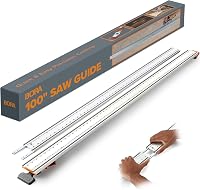
A purpose-built guide can make setup easier. The BORA NGX 100-Inch Guide Rail combines a 50 in clamp edge with a 50 in extension for long cuts on sheet material.
Check that the rail is secure and that the saw can travel its full length without hitting clamps. If the sheet is wider than the guide's reach, reset it carefully or use a longer guide system.
For a homemade option, see how to make a circular saw guide for straight cuts. If the cut runs along the length of a narrower board, our guide to ripping a board with a circular saw explains the same straightedge setup.
How deep should you set the blade?
Set the blade so its teeth extend just below the plywood, about 1/8 in when practical. A shallow setting limits exposed blade while still allowing the teeth to pass through the panel.
Unplug the saw or remove its battery before adjusting the blade depth. Lock the depth adjustment, then check that the blade clears the support beneath the sheet.
If the panel is thicker than the saw can cut in one pass, don't force it. Check the saw's capacity and choose a tool or method suited to the material; how deep a circular saw can cut explains how cut depth changes with angle and saw design.
How do you make the cut without binding the blade?
Start with the shoe flat on the plywood and the blade clear of the material, then bring the saw to full speed before entering the cut. Move forward at a steady pace without pushing hard or twisting the saw.
Keep both hands on the saw as its manual directs. Stand to one side of the blade's line, and keep your hands away from the cut and the underside of the panel.
Watch the guide and the cut line without leaning over the saw. If the blade slows, the panel shifts, or the kerf starts closing, release the trigger and wait for the blade to stop before checking the setup.
Don't lift or pull the saw back through a moving blade. Let it stop fully before setting it down.
Can you cut plywood with a track saw?
Yes, a track saw is designed to follow a rail for long, straight cuts. It can suit repeated panel work or cuts where controlling the saw's path is difficult with a handheld straightedge.
The WEN CT1065 is a plunge track saw with a 6.5 in blade and a 10 amp motor. Its compatible track is sold separately, so include the rail and clamps in your setup.
Use the track and saw according to their manuals, and confirm the track is secured before cutting. If you are choosing between a track saw and a regular circular saw with a rail, what a track saw is covers the difference.
How can you reduce splintering on the cut edge?
Use a suitable sharp blade, firm support, and a steady feed to reduce tear-out. Avoid forcing the saw through the panel, which can leave a rough edge or pull the cut off line.
Choose a blade made for plywood or finish work, and check that it fits your saw. More teeth can leave a cleaner edge in some setups, but the blade maker's instructions and the saw manual take priority.
A shallow scoring pass can help with a visible face: set the blade for a light cut, make a pass along the guide, then set the depth for the full cut. Practice on scrap first so you can confirm the line and depth.
The Kreg Straight Edge Guide XL is a guide option for compatible circular saws, jigsaws, and trim routers. Its cutline indicator helps position the rail, and its clamp is intended for materials up to 8 ft.
Don't assume a guide alone prevents chips. Keep the panel supported and check the blade condition if the edge is still rough.
What should you do with a long or heavy plywood sheet?
Get help or use a panel support if the sheet is hard to lift, position, or control. A helper should steady the panel from a safe distance and stay away from the blade path and offcut.
Set the sheet at a comfortable height, with enough room to guide the saw without reaching across the blade. Check that the cord won't snag and that the offcut has space to settle without trapping the saw.
For a guide paired with a cordless saw, the DeWalt DCS590B is a 20V MAX XR brushless 7-1/4 in circular saw. Its stated maximum depth is 2-9/16 in at 90 degrees; battery and charger are sold separately.
A cordless saw can avoid cord placement across a large sheet, but you still need to manage the battery and saw safely. See how to use a circular saw for beginners for basic setup and handling.
What should you check before starting?
Confirm the sheet is stable, the blade depth is set, the guide is clamped, and the offcut can move freely. Check the cut path for nails, screws, or other objects before starting.
Wear eye and hearing protection, keep bystanders clear, and follow the saw maker's instructions. Never hold a small offcut by hand near the blade or reach beneath a running saw.
Make a short practice cut in scrap from the same panel if the finished edge matters. That lets you check the blade direction, guide offset, and surface tear-out before committing to the full sheet.
Which setup should you choose for cutting plywood?
For a single straight cut, use a stable support, a clamped straightedge, and a circular saw with a suitable blade. Choose a long guide rail or track saw when repeated or full-sheet cuts make guided travel easier.
The BORA rail suits a long guide setup, while the Kreg guide offers a cutline indicator for positioning. The WEN is a track saw option when paired with its compatible track, and the DeWalt is a cordless saw choice when a guide is already part of your setup.
Before cutting, check the manual, support the full panel, and keep the blade path clear. If you're still learning the tool, start with our circular saw beginner walkthrough.
Frequently asked questions
Which side of plywood should face down when cutting?
With a standard circular saw, place the finished face down because the blade teeth usually exit through the top and can chip that surface. Check your saw's blade direction and test the setup on scrap, since blade orientation and cut quality can vary.
How can I cut plywood without splintering?
Use a sharp blade intended for plywood or finish cuts, support the panel close to the cut, and feed the saw steadily. A straightedge helps keep the cut on line.
Painter's tape over the cut mark or a shallow scoring pass may reduce surface tear-out, but test the method on scrap first.
How deep should a circular saw blade be set for plywood?
Set the blade so its teeth extend just below the plywood, often about 1/8 in. This limits exposed blade while allowing the teeth to cut through.
Unplug a corded saw or remove the battery before adjusting depth, and follow the saw manual.
Can one person cut a full sheet of plywood?
One person can cut a sheet if it is stable, fully supported, and manageable to lift and control. A helper can steady a large panel, but they should stay clear of the blade path and offcut.
Use a panel support or ask for help if the sheet is awkward.