Circular Saws Explained: A Plain Guide for Home Projects
Circular saws make straight cuts in lumber and sheet goods. Choose a saw by the material, cut depth, power source and the control you need for the job.
On this page (10 sections)
- What are circular saws used for?
- How do blade size and cut depth affect the choice?
- Does blade choice matter as much as the saw?
- Should you choose a corded or cordless circular saw?
- What makes a worm drive saw different?
- When does a circular saw guide or track help?
- How do you set up a safe, clean cut?
- Which circular saw features should you compare?
- Which circular saw fits your home projects?
- FAQ
Circular saws make straight cuts in lumber and sheet goods with a spinning toothed blade. For home projects, choose one by the material, the cut depth you need, how you’ll power it and whether a guide will help keep the cut straight.
A circular saw can crosscut a board, rip it lengthwise or make an angled bevel cut. It’s portable, but the work still depends on a suitable blade, stable support and careful setup.
This guide explains the main choices and links to practical next steps, including how to use a circular saw for beginners.
What are circular saws used for?
Circular saws are used for straight cuts through wood and sheet goods. With the right blade and capacity, a handheld saw can handle common DIY cuts without needing a large stationary saw.
A crosscut goes across a board’s grain. A rip cut follows the grain along a board’s length, and a bevel cut angles the blade to make an edge that is not square to the face.
Plywood and other sheet goods are also common jobs, though their size makes support and cut guidance especially important. See how to cut plywood with a circular saw for setup details.
A circular saw is not the right tool for every cut. Curves, small detailed shapes and cuts that need a fixed fence or miter angle may call for a different saw or setup.
How do blade size and cut depth affect the choice?
Blade size helps determine how deep a saw can cut, but the saw’s stated depth capacity is the figure to check. The actual cut depth changes with the blade angle and the saw’s adjustment.
A 7-1/4 in blade is a familiar size for many home and framing tasks. A smaller blade can make a saw easier to carry, while a larger blade may reach deeper, but the specific tool’s capacity matters more than size alone.
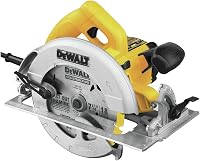
The DeWalt DWE575SB is described with a 2-9/16 in depth capacity and a 57° bevel capacity. The DeWalt DCS590B is described with maximum depths of 2-9/16 in at 90° and 2 in at 45°.
When setting depth, allow the blade to extend only as far below the material as the cut requires. Check the saw’s manual for adjustment steps and keep hands clear of the blade path.
For help matching capacity to your lumber, read what size circular saw do I need. To check whether your saw can handle a specific post, see can a circular saw cut a 4x4.
Does blade choice matter as much as the saw?
Blade choice matters because the blade’s tooth design and condition affect the cut. Choose a blade rated for the saw and intended material, then follow the blade maker’s instructions.
A blade meant for fast framing cuts may leave a rougher edge than a blade designed for cleaner cuts in sheet goods. Don’t assume that one general-purpose blade gives the same finish in every material.
Before installing or changing a blade, disconnect the cord or remove the battery. Follow the tool manual, check that the blade is installed in the correct direction and use the supplied wrench or lock method as instructed.
A dull, damaged or unsuitable blade can make cutting harder to control. Stop and inspect the blade if it binds, wanders or leaves an unexpectedly poor cut.
Should you choose a corded or cordless circular saw?
Choose a cordless saw for mobility and a corded saw when dependable access to an outlet fits your work. Battery tools also make sense when you already own compatible batteries and chargers.
Cordless models give you room to move without managing a cord around the workpiece. Their runtime depends on the battery and workload, and some tools are sold without a battery or charger.
The DCS391B is a 6-1/2 in cordless saw with a magnesium shoe and a 0° to 50° bevel capacity. Its battery and charger are sold separately.
A corded saw avoids battery runtime as a limit, though you’ll need to route its cord safely and work within reach of power. The DWE575SB has a 15 amp motor and an electric brake.
The DCS590B is a 7-1/4 in cordless saw with a brushless motor, electric brake and stated maximum depths of 2-9/16 in at 90° and 2 in at 45°. Its battery and charger are sold separately.
Compare the trade-offs in corded vs cordless circular saws before choosing a power source.
What makes a worm drive saw different?
A worm drive saw uses a different drive layout from the common sidewinder style. It’s a corded option to consider when you want a worm drive design and the weight and handling suit your work.
The Skilsaw SPT77WML-01 has a 15 amp rating, magnesium construction and 53° bevel capacity. Its listed weight is 11.5 lb, a factor to consider if you’ll carry or position the saw often.
The right choice depends on how the saw feels to guide and how often your work calls for that design. Read what is a worm drive circular saw for a closer look.
When does a circular saw guide or track help?
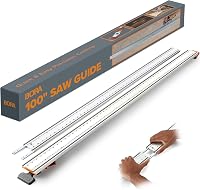
A guide helps keep a long cut straight by giving the saw a consistent path to follow. A clamped straightedge can work for occasional cuts, while a track saw system is built around a dedicated rail.
Set the guide against the marked cut line and account for the distance between the saw’s base edge and blade. Check that clamps and supports will stay clear of the saw as it moves.
Guides do not replace support under the workpiece. Secure the material so the cut-off section cannot pinch the blade or fall as the cut finishes.
For a simple straightedge setup, see how to make a circular saw guide. If you regularly break down sheet goods, what is a track saw explains when a rail-based saw may fit better.
How do you set up a safe, clean cut?
A safe cut starts with stable material, a clear blade path and the right protective gear. Read the saw manual and use the guards and controls as intended.
Support the workpiece near the cut while keeping the blade path clear of the bench, sawhorses and clamps. For a large sheet, plan support on both sides so the material does not sag or close on the blade.
Set the cut depth and bevel before starting. Keep the cord or battery clear of the cut, stand to one side of the blade path and let the saw reach speed before moving into the material.
Use eye and hearing protection, and control dust with a suitable method for the workspace and material. Wait for the blade to stop before setting the saw down or handling the offcut.
If the saw binds, release the trigger and hold the tool steady until the blade stops. Find the cause before continuing, and don’t pull a trapped blade backward through the cut while it is moving.
Which circular saw features should you compare?
Compare cut capacity, power source, bevel range, handling and safety features against the work you plan to do. A longer feature list does not matter if it solves no problem in your projects.
| What to compare | Why it matters |
|---|---|
| Blade size and depth capacity | Shows whether the saw can reach through the material at the angle you need |
| Corded or cordless power | Affects where you can work and whether you need batteries or an outlet |
| Bevel capacity | Helps when your project calls for angled cuts |
| Weight and grip | Matter when positioning the saw or carrying it between jobs |
| Brake and guard design | Affect how the saw stops and how the blade is covered |
| Guide compatibility | Can simplify long cuts when paired with the right rail or straightedge |
The DCS391B has a lightweight magnesium shoe and rubber overmolded grip. The DCS590B and DWE575SB include electric brakes, while the SPT77WML-01 has magnesium construction and an anti-snag lower guard.
Product features are useful only when they match your needs. Check the manual for operating steps, safety limits and compatible accessories before a first cut.
Which circular saw fits your home projects?
Choose a saw around the cuts you make most often. A compact cordless option can suit mobile DIY work, a corded saw can fit repeated work near power, and a worm drive model suits buyers who want that drive style.
The DCS391B offers a 6-1/2 in blade and cordless operation. The DCS590B is a brushless 7-1/4 in cordless option with an electric brake and stated cut depths, while the DWE575SB is a 15 amp corded saw.
The SPT77WML-01 has a worm drive design, magnesium construction and a 53° bevel capacity. Compare weight and handling needs before choosing it for frequent overhead or extended work.
For a beginner, the best starting point is a saw that reaches the needed depth and feels controllable with a guide and stable material. Continue with how to rip a board with a circular saw when your project calls for a lengthwise cut.
FAQ
What is a circular saw used for?
A circular saw is a handheld power saw for straight cuts in wood, plywood and similar building materials when fitted with a suitable blade. It can crosscut boards, rip them lengthwise and make bevel cuts.
Use a guide for long straight cuts, and check the saw's capacity before cutting thick stock.
What size circular saw is best for home projects?
A 7-1/4 in circular saw is a common choice for home projects because that blade size is widely used and can handle many framing and sheet-good cuts. A smaller saw may be easier to carry, while a larger or specialized saw may suit a particular material or cut.
Match depth capacity to your work.
Should I get a corded or cordless circular saw?
Choose a cordless saw when moving around a site or working away from outlets matters, and choose a corded saw when a steady power connection suits repeated cuts. Cordless tools need a compatible charged battery, which may be sold separately.
Your workload, existing battery platform and access to power should guide the choice.
Can a circular saw cut plywood?
Yes, a circular saw can cut plywood with a suitable blade and stable support. Mark the cut, support both sides so the sheet cannot sag, and use a straightedge or guide for a controlled line.
A fine-tooth blade and careful setup can help reduce splintering on the visible face.
Do I need a track saw instead of a circular saw?
A standard circular saw with a straightedge can handle many long cuts, while a track saw pairs the saw with a dedicated guide rail for repeatable guided cuts. Choose based on how often you need that setup, the sheet sizes you handle and the accuracy your projects demand.
Frequently asked questions
What is a circular saw used for?
A circular saw is a handheld power saw for straight cuts in wood, plywood and similar building materials when fitted with a suitable blade. It can crosscut boards, rip them lengthwise and make bevel cuts.
Use a guide for long straight cuts, and check the saw's capacity before cutting thick stock.
What size circular saw is best for home projects?
A 7-1/4 in circular saw is a common choice for home projects because that blade size is widely used and can handle many framing and sheet-good cuts. A smaller saw may be easier to carry, while a larger or specialized saw may suit a particular material or cut.
Match depth capacity to your work.
Should I get a corded or cordless circular saw?
Choose a cordless saw when moving around a site or working away from outlets matters, and choose a corded saw when a steady power connection suits repeated cuts. Cordless tools need a compatible charged battery, which may be sold separately.
Your workload, existing battery platform and access to power should guide the choice.
Can a circular saw cut plywood?
Yes, a circular saw can cut plywood with a suitable blade and stable support. Mark the cut, support both sides so the sheet cannot sag, and use a straightedge or guide for a controlled line.
A fine-tooth blade and careful setup can help reduce splintering on the visible face.
Do I need a track saw instead of a circular saw?
A standard circular saw with a straightedge can handle many long cuts, while a track saw pairs the saw with a dedicated guide rail for repeatable guided cuts. Choose based on how often you need that setup, the sheet sizes you handle and the accuracy your projects demand.