What Is a Track Saw, and Who Needs One?
A track saw is a circular saw that rides on a guide rail to make straight cuts in sheet goods and boards. It suits you if you need accurate long cuts or plunge cuts and want a portable setup.
On this page (8 sections)
- What is a track saw, and how does it work?
- What makes a track saw different from a regular circular saw?
- Who needs a track saw?
- What can a track saw cut?
- Does the rail length matter?
- What should you check before choosing a track saw?
- Is a track saw worth it for home projects?
- What is a track saw, and who should choose one?
A track saw is a circular saw that rides on a guide rail to make straight cuts in sheet goods and boards. It suits you if you need accurate long cuts or plunge cuts and want a portable setup.
The rail guides the saw along the cut line, which can be useful when a full sheet of plywood is too large to move across a table saw. A track saw can also be carried to the material instead of bringing the material to a fixed machine.
What is a track saw, and how does it work?
A track saw uses a saw base shaped to fit a matching guide rail. You position the rail on the workpiece, then move the saw along it to follow the intended cut.
Many track saws are plunge saws. Their blade can descend into the material after you position the saw, which allows an opening to start away from the edge of a panel.
Some models can also sit on their flat base without the rail. A rail is still the key part for guiding long, straight cuts, so check compatibility before pairing a saw with a track.
The Makita SP6000J is a plunge circular saw designed to work with an optional guide rail system. Its variable speed dial ranges from 2,000 to 5,200 RPM, and Makita describes electronic speed control for maintaining speed under load.
What makes a track saw different from a regular circular saw?
A track saw is built to follow a guide rail, while a regular circular saw usually needs a separate straightedge or guide for a long, straight cut. The rail helps keep the saw on the intended path as you move it across a panel.
A standard circular saw remains useful for quick cuts, framing work, and jobs where a guide rail is unnecessary. For a basic overview of the other saw type, see circular saws explained.
A track saw can be useful when you need a long cut in sheet material that is difficult to support or move. For a regular circular saw setup, our guide to making a circular saw guide for straight cuts explains another way to guide the saw.
Who needs a track saw?
A track saw fits people who often cut plywood, furniture panels, doors, or other large pieces where a straight, guided cut matters. It can also help when you need to make a plunge cut within a panel rather than start from its edge.
Woodworkers may value it for breaking down sheet goods before moving smaller parts to a table saw. DIYers may find it useful for trimming doors or sizing panels in a garage or on a job site.
A track saw may be more tool than you need if you make only occasional rough cuts in small boards. A circular saw and a straightedge can cover many basic jobs, as described in how to rip a board with a circular saw.
What can a track saw cut?
A track saw can cut boards and sheet goods within its depth capacity, using the rail to guide the cut. The material, blade, setup, and saw capacity all affect what a given model can handle.
For example, the WEN CT1065 is described for ripping boards up to 2-1/3 in thick and making 45-degree bevel cuts up to 1-5/8 in thick. It includes a 6.5 in carbide-tipped blade and is compatible with the WEN CT9502 track.
Before cutting, set the depth for the material and secure the rail and workpiece. Follow the saw's instructions for blade changes, plunge settings, and safe operation.
Does the rail length matter?
Rail length determines how much of a cut you can guide in one pass. Longer cuts may require a longer rail or connected rail sections that stay aligned and stable.
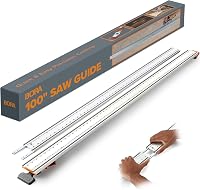
The WEN CT9502 set includes two 50 in tracks and adapters, creating a 100 in guide rail. WEN says the set is designed for the CT1065 and is also compatible with track saws from Evolution, Makita, and Festool.
Check the rail's compatibility with your saw, and confirm how the sections connect before beginning a long cut. Secure the rail as directed so it does not shift during the pass.
What should you check before choosing a track saw?
Start with the material and cut you need to make. Look at the saw's cutting depth, bevel capacity, rail compatibility, power source, and whether its blade suits your work.
The WEN CT1274 accepts standard 7-1/4 in miter and circular saw blades with 5/8 in arbors. It has variable speed operation from 2,000 to 6,000 RPM and works with WEN CT9502 and CT9110 rails.
A larger blade does not automatically make a saw the right choice. Check the capacity you need and the rail system you plan to use.
Compare rail options in our guide to circular saw guide rails. If you are deciding between a track saw and a circular saw guide attachment, Kreg Rip-Cut vs Accu-Cut can help frame that choice.
Is a track saw worth it for home projects?
A track saw is worth considering if you regularly need straight cuts in large panels, want plunge cuts, or need a portable way to break down sheet goods. It may not be necessary for short, rough cuts that a basic circular saw can handle.
Choose the saw and rail as a compatible setup, then match the cutting capacity to your materials. If you mostly cut small boards, start with a plain guide to circular saws and consider a track saw when your projects call for longer guided cuts.
What is a track saw, and who should choose one?
A track saw is a circular saw designed to travel on a guide rail for controlled, straight cuts. Choose one if you regularly cut large panels or need plunge cuts; choose a regular circular saw and suitable guide if your work is occasional and less demanding.
For specific options, compare track saws for the money and check the rail fit before settling on a setup.
Frequently asked questions
What is a track saw used for?
A track saw is used to make straight cuts along a guide rail, especially in plywood, panels, and boards that are awkward to move across a table saw. Many track saws can also make plunge cuts that begin inside a panel.
Choose one when a long, guided cut matters more than quick rough cuts.
Is a track saw the same as a circular saw?
A track saw is a type of circular saw, but its base is designed to travel along a compatible guide rail. That rail helps guide the cut and support the work.
A standard circular saw can also follow a straightedge or rail when the saw and guide are compatible.
Do you need a track for a track saw?
A guide rail is needed to get the long, guided cuts that make a track saw useful. Some models can also operate on their own as plunge saws, but their rail compatibility and setup vary.
Check that the saw and rail fit each other before buying.
Who should buy a track saw?
A track saw makes sense for woodworkers, remodelers, and DIYers who often cut large panels, trim doors, or need straight cuts on material that is hard to handle alone. If your cuts are short, rough, and occasional, a circular saw with a suitable straightedge may be enough.