Corded vs Cordless Circular Saw: Which Fits Your Work? (October 2026)
Choose a corded saw for a steady outlet supply and a cordless saw for work away from an outlet. Blade size, battery needs and the way you move around the job also matter.
On this page (6 sections)
Choose a corded circular saw for work near a suitable outlet and a cordless saw when you need to move freely. The corded vs cordless circular saw choice also depends on blade size, cut capacity and whether you already have batteries for the cordless model.
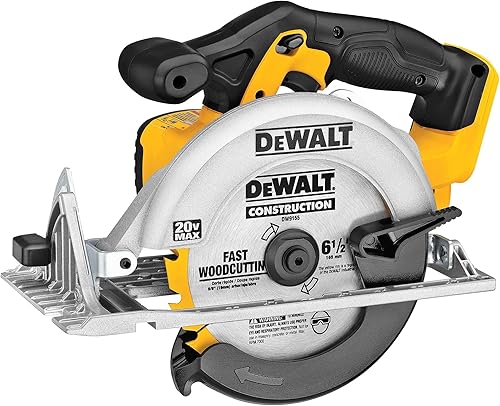
The DeWalt DWE575 is a corded 7-1/4 in saw with a 15 amp motor and a stated 2-9/16 in depth of cut capacity. The DeWalt DCS391B is battery powered, uses a 6-1/2 in blade and requires a battery and charger, sold separately.
The Skil 5280-01 offers another corded option, with a 15 amp motor, 7-1/4 in blade and single-beam laser guide. Compare the power setup first, then check whether the saw's size and features fit your usual cuts.

Corded vs cordless circular saw: which suits your work?
Choose corded when a suitable outlet is close; choose cordless when the work takes you away from one. That simple difference affects setup, movement and how you plan a long cutting session.
A corded saw needs a safe route to power. Keep the cord away from the blade and the cut path, and plan where it can trail as you reposition the saw.
A cordless saw removes that cord from the work area. You still need a charged, compatible battery, and the DCS391B does not include its battery and charger.
Is a corded saw better for a fixed work area?
A corded saw can suit a bench or work area where a suitable outlet is within reach. The DWE575 has a 15 amp motor, and its Toughcord is designed for durability against cord pullouts.
That setup avoids planning a battery change during the work. It doesn't make the cord irrelevant: keep it clear of the material, your feet and the blade.
The DWE575 also has an integrated dust blower to clear the line of sight. Its clear line of sight and aluminum base are useful details to consider when comparing the saw's layout and handling.
Is a cordless saw better for moving around?
A cordless saw can be easier to reposition because it doesn't need a power cord trailing behind it. That can help when you're working across large pieces or changing locations, provided you have a charged battery.
The DCS391B has a rubber overmolded grip and a magnesium shoe. Its 0-50 degree bevel capacity supports angled cuts, but its battery and charger are sold separately.
If you're choosing a saw for regular work, consider how often you cut and how many batteries you can keep ready. Our guide to best battery powered circular saws covers more cordless options.
How do blade size and cut depth compare?
The DWE575 has a larger 7-1/4 in blade and a stated 2-9/16 in depth of cut; the DCS391B has a 6-1/2 in blade. Match those details to the material thickness and cut angle you need.
The blade diameter is a useful starting point, but it doesn't tell the whole story. A saw's cut depth can change with the bevel setting, so check the manual for the exact capacity at the angle you plan to use.
The DWE575 lists a 53-degree bevel capacity, with stops at 45 and 22.5 degrees. The DCS391B lists a 0-50 degree bevel capacity.
Which saw fits thicker stock?
The DWE575 is the clearer fit here if your cuts need its stated 2-9/16 in depth capacity. Confirm the capacity for the exact angle and setup in the manual before cutting.
The DCS391B's smaller blade can suit many common cuts, but don't assume it reaches as deep as a 7-1/4 in saw. Check the model's cut capacity against the material you plan to use.
Our guide to circular saw cut depth explains why blade size, bevel angle and saw design all affect how deeply a saw can cut. For thicker stock, also review safe support and cutting steps before starting.
Which saw suits plywood sheets?
Either type can cut plywood when the blade and setup suit the job. A cordless saw may be easier to move around a large sheet, while a corded saw can keep running without a battery swap when you have a safe outlet route.
Support the sheet so the cut won't pinch the blade or leave a narrow offcut unsupported. Use a straightedge or guide if you need a long, straight cut.
Follow our guide to cutting plywood with a circular saw for setup and cut planning. If you need help choosing a blade size for your material, see what size circular saw you need.
What does the power setup mean for longer jobs?
A corded saw can keep working while it has a suitable power connection; a cordless saw depends on battery charge. Your job length, access to outlets and spare batteries determine which setup is easier to manage.
For a corded saw, plan the route before you start and avoid extension cords unless the manual permits them and they are rated for the saw's needs. Keep connections dry and away from the blade path.
For a cordless saw, charge batteries ahead of time and keep any spare battery compatible with the saw. The DCS391B battery and charger are sold separately, so include them in your setup plan.
Neither power type guarantees an uninterrupted job. A tripped circuit, a disconnected cord or a depleted battery can all stop work, so think through your power source before cutting.
Which saw is easier to control?
Pick the saw you can guide steadily while keeping the cord or battery setup under control. Weight, grip, balance and sight lines all affect how the tool feels in your hands.
The DWE575's product information calls it one of the lightest in its class at 8.8 lb, while the listed item weight in its specs is 5.6 lb. Since those figures conflict, don't use either as a decisive comparison without checking the saw's manual or current packaging.
The DCS391B has an optimized rubber overmolded grip for balance and control, and a magnesium shoe. The Skil 5280-01 weighs 8.7 lb and includes a dust blower and laser guide.
A laser guide can help you see a line, but it doesn't replace a careful setup or a steady feed. Before cutting, check that the base sits flat and the guard moves freely.
Which corded circular saw is worth comparing?
The DWE575 suits buyers who want a 7-1/4 in blade, bevel capacity and dust blower; the Skil 5280-01 adds a laser guide. Both are corded, so your choice comes down to the features and layout you prefer.
The DWE575 has a 53-degree bevel capacity with stops at 45 and 22.5 degrees, plus a clear line of sight and on-board blade wrench storage. Its 2-9/16 in depth of cut capacity may suit jobs where a smaller blade is limiting.
The Skil 5280-01 has a single-beam laser guide, a dust blower and a 51-degree bevel capacity with a positive stop at 45 degrees. It includes a 7-1/4 in carbide-tipped blade and spindle lock.
For more corded choices, see our best budget circular saws. If you want a rear-handle design, compare the pros and cons in our rear handle vs top handle circular saw guide.
Which saw should you choose?
Choose the DWE575 if you want a corded 7-1/4 in saw with a stated 2-9/16 in cut depth; choose the DCS391B if freedom from a cord matters more and you can supply its battery and charger. The Skil 5280-01 is another corded option if its laser guide and dust blower match your preferences.
If you already own compatible batteries, the cordless option may fit your tool setup more naturally. If you work near an outlet and want a larger blade, a corded saw may be simpler to plan around.
For a broader comparison, explore DeWalt vs Milwaukee circular saws. Choose by power access, required cut depth and the way you work, then confirm the saw's manual and safety steps before using it.
Frequently asked questions
Is a corded or cordless circular saw better?
A corded saw suits work near a suitable outlet, while a cordless saw suits jobs where moving freely matters more. Compare the specific blade size, cut depth and battery needs too; the DeWalt cordless model uses a 6-1/2 in blade, while the corded DWE575 uses a 7-1/4 in blade.
Does a cordless circular saw need a battery?
Yes. The DeWalt DCS391B is battery powered, and its battery and charger are sold separately.
Check which battery system you already use and whether you need to buy those items before choosing it, since the saw alone won't provide power.
Can a cordless circular saw replace a corded saw?
It can cover many of the same kinds of cuts, but the exact models may differ in blade size and cut capacity. The DCS391B has a 6-1/2 in blade, while the DWE575 has a 7-1/4 in blade and 2-9/16 in depth of cut capacity.
Are corded circular saws more powerful?
A corded saw avoids battery runtime limits while connected to a suitable outlet, but power depends on the specific saw. The DWE575 has a 15 amp motor; compare the cut capacity and features you need rather than assuming every corded model outperforms every cordless one.
What should you choose for cutting plywood?
Choose based on your work area, sheet size and ability to support the material safely. A cordless saw can be easier to move around a large sheet, while a corded saw can run without a battery change when an outlet is within safe reach; see our guide to cutting plywood with a circular saw.


