Brushless vs Brushed Circular Saw: Is It Worth More? (October 2026)
Choose a brushless circular saw if its features and cutting capacity fit your work; a brushed saw may suit occasional cuts. Compare the exact saws, since blade size and features matter alongside motor type.
On this page (5 sections)
A brushless circular saw can be worth more if its features and cutting capacity match your work; a brushed saw may be enough for occasional cuts. In this brushless vs brushed circular saw comparison, the specific model matters as much as the motor type.
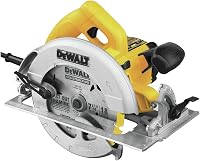
The DeWalt DCS590B has a 7-1/4 in blade and a stated maximum cut depth of 2-9/16 in at 90°. The DCS565B is brushless too, but its 6-1/2 in blade has a stated maximum depth of 2-1/8 in at 90°.
The DCS391B gives you a 6-1/2 in alternative with a 0–50° bevel range, but its motor type isn't specified in the product facts here. Check the motor type for the exact model before you buy if that distinction decides your choice.

Brushless vs brushed circular saw: which should you choose?
Choose by the cuts and features you need, then use motor type as a tie-breaker. Blade size, cut depth, bevel capacity and included features can change how useful a saw is for your work.
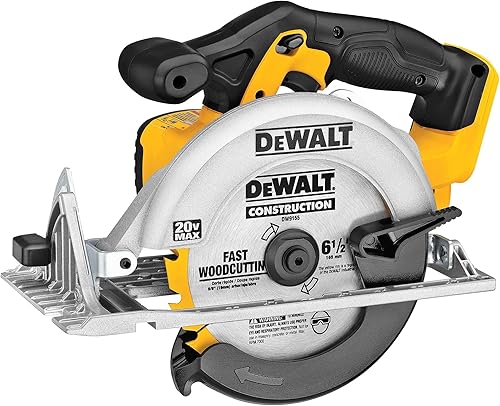
The DCS590B pairs a brushless motor with a 7-1/4 in blade, an electric brake and a stated 2-9/16 in maximum cut depth at 90°. The DCS565B is also brushless, with a 6-1/2 in blade, an electric brake and a stated 2-1/8 in maximum depth at 90°.
The DCS391B has a 6-1/2 in blade, a 5,150 RPM motor and a 0–50° bevel capacity. Since its motor type isn't specified here, don't assume it is brushed based only on its name or its position in this comparison.
When does brushless make sense?
Brushless makes sense if you want a brushless model's stated features and plan to use them. In this group, the DCS590B's larger blade and stated depth may fit cuts the DCS565B can't handle at 90°.
The DCS565B adds an electric brake, bright LED, built-in rafter hook and tool-free bevel lever. Those features may matter more to your choice than the motor label if you want a smaller blade.
The manufacturer describes the DCS590B as delivering up to 368 cuts per charge, but that is a stated figure, not a promise for every battery, material or cut. Battery and charger are sold separately for both brushless models.
When is a brushed saw enough?
A brushed saw may be enough when you make occasional cuts and the exact model's capacity and features cover your tasks. Don't pay for a motor design you don't need if a lower-cost saw already fits the job.
The DCS391B offers a 6-1/2 in blade and a 0–50° bevel range. Its magnesium shoe is described as high strength and lightweight, and its rubber over-molded grip is designed for balance and control.
Its motor type isn't confirmed in the facts here. Compare the exact tool specifications and price before treating it as a brushed alternative.
Do brushless circular saws cut better?
Motor type alone doesn't prove that one saw cuts better. Match the blade, depth capacity, motor output and intended material to the work you plan to do.
The DCS590B is described as producing up to 1,700 MWO and up to 5,500 RPM with no load. The DCS565B is described as delivering 4,950 RPM, while the DCS391B has a stated 5,150 RPM motor.
These figures don't make a direct cutting test. They describe different saws, and no-load RPM doesn't show how quickly a saw will cut a particular board under load.
For a cut near the limit of a saw's capacity, start with the stated depth at the angle you need. Our guide to how deep a circular saw can cut explains why blade size and angle affect that choice.
Does a larger blade matter more than a brushless motor?
A larger blade can matter more when you need the saw's added depth capacity. The DCS590B's 7-1/4 in blade and 2-9/16 in maximum depth at 90° give it a different role from the two 6-1/2 in models.
The DCS565B lists a maximum depth of 2-1/8 in at 90°. Check the manual for the exact model and the capacity at your chosen bevel angle before planning a cut.
If your projects are mostly sheet goods and boards within a 6-1/2 in saw's capacity, the DCS565B may be the more relevant brushless comparison. See our guide to choosing a circular saw size to compare blade size with the materials you cut.
Which features should you compare besides the motor?
Compare features that affect your cuts, control and setup. A brushless label doesn't tell you whether a saw has the blade size, bevel range or brake you want.
The DCS590B has an electric brake designed to stop the blade from coasting after the trigger is released. The DCS565B also has an electric brake, plus a bright LED, built-in rafter hook and optional dust chute.
The DCS391B lists a magnesium shoe and a rubber over-molded comfort grip. Its stated bevel capacity is 0–50°, compared with 0–50° for the DCS565B and a 57° bevel capacity for the DCS590B, with stops at 45° and 22.5°.
A brake can help limit blade coasting after a cut, but it doesn't replace safe handling. Keep the guard in place and follow the saw's manual for setup and operation.
What should you know about batteries?
All 3 saws are battery powered, so include battery and charger needs in your comparison. The DCS590B and DCS565B are tool-only models with battery and charger sold separately.
The DCS391B also says its battery and charger are sold separately. The DCS565B is compatible with DeWalt 20V MAX and FLEXVOLT batteries, according to its product description.
Battery needs can affect your total setup and the time you can work between charges. If you are comparing a corded tool with a cordless one, our corded vs cordless circular saw guide covers the trade-offs.
Which DeWalt saw fits each kind of work?
Choose the DCS590B for its greater stated cut depth, the DCS565B for a smaller brushless option, and the DCS391B if its specific features fit and you confirm the motor type. These are different tool choices, not a controlled performance ranking.
The DCS590B is the strongest fit here for cuts that need its stated 2-9/16 in depth at 90°. Its 7-1/4 in blade and 57° bevel capacity with stops at 45° and 22.5° add flexibility for varied cuts.
The DCS565B makes sense if you want a brushless 6-1/2 in saw with an electric brake, LED, rafter hook and tool-free bevel lever. Its maximum depth at 90° is 2-1/8 in.
The DCS391B is worth considering if the 6-1/2 in blade, 0–50° bevel capacity, magnesium shoe and grip suit your tasks. Verify whether the exact model is brushed before treating it as the brushed side of the decision.
For more cordless options, see our best battery powered circular saws. For a closer look at the larger brushless model, read our DeWalt DCS590B review.
Brushless vs brushed circular saw: is the upgrade worth it?
Pick brushless when a specific brushless saw's capacity or features solve a real need; pick a brushed model when a suitable saw covers your cuts for less. Confirm the motor type and compare the complete tool cost, including batteries and charger.
For the deepest stated cut in this group, choose the DCS590B. For a 6-1/2 in brushless saw with an electric brake and LED, consider the DCS565B.
The DCS391B may fit if its features match your work, but verify its motor type first. Start with the cuts you make most often, then compare blade size, depth and bevel capacity before deciding whether brushless is worth more.
For more options and buying advice, browse our battery powered circular saw guide.
[ENERGY? no]
Frequently asked questions
Is a brushless circular saw worth the extra cost?
It can be worth paying more if you use the saw often, want the features on a specific brushless model, or need its stated cutting capacity. The motor label alone doesn't tell you the value.
Compare the exact blade size, depth, brake, battery needs and price before choosing.
What is the difference between a brushless and brushed circular saw?
A brushless motor has no brushes in its motor design, while a brushed motor uses brushes to transfer power to the rotating part. That design difference can affect efficiency and maintenance needs, but the facts here don't quantify those differences for these saws.
Compare the full tool and its features.
Is the DeWalt DCS391B brushless?
The DCS391B product facts here don't specify whether its motor is brushed or brushless. It is a 20V MAX 6-1/2 in circular saw with a 5,150 RPM motor and 0–50° bevel capacity.
Check the exact model details before buying if motor type is essential.
Should I get a 6-1/2 in or 7-1/4 in circular saw?
Choose based on the depth your cuts require and the saw's stated capacity. The DCS590B 7-1/4 in model lists a maximum depth of 2-9/16 in at 90°, while the DCS565B 6-1/2 in model lists 2-1/8 in.
Check the capacity at your intended bevel angle too.