DeWalt DCS565 vs Milwaukee 2833: Which Wins? (November 2026)
The DeWalt DCS565 wins for most buyers because its 5,150 rpm motor and 6-1/2 inch blade handle demanding cuts and 0-50 degree bevels. The Milwaukee 2833 is the better pick only when you want the smaller, lighter bare tool.
On this page (6 sections)
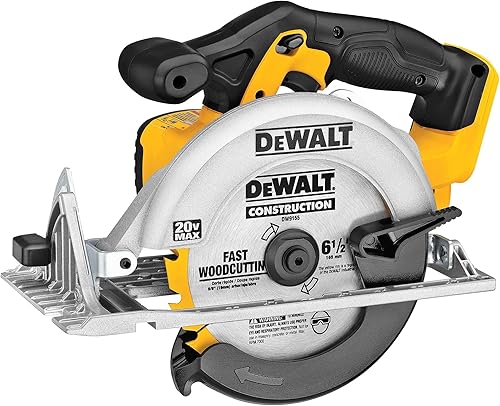
The DeWalt DCS565 wins this comparison for most buyers. Its 5,150 rpm motor and 6-1/2 inch blade make demanding cuts and wide bevels easier, and the magnesium shoe keeps it light enough for job-site work.
The Milwaukee 2833 earns its place when you want a smaller bare tool for plumbing and finishing tasks.
Both saws are cordless, both take a 6-1/2 inch blade, and neither ships with a battery or charger. In this dewalt dcs565 vs milwaukee 2833 circular comparison, the motor speed and bevel range separate them more than the blade size does.
Each saw also ships with a 24-tooth blade in its data, so the stock blade is the same tooth count on both sides. That makes the motor and the base your real decision points, not the blade that comes in the box.
The DeWalt model number in the product data for this saw is DCS391B, so that's the DeWalt saw we compare here. Check the exact model on the product page before ordering if the DCS565 number matters to you.
DeWalt DCS565 vs Milwaukee 2833: the two saws side by side
The DeWalt is faster and bevels wider; the Milwaukee is lighter and built around a bare tool. The table below puts the published specs next to each other.
 Best for light framing and plumbing work
Milwaukee M18 2630-20 6-1/2 Inch Circular Saw
| Product | Best for | Speed | Blade size | Bevel | Our score |
|---|---|---|---|---|---|
| DeWalt DCS391B 20V MAX Circular Saw | overall for most buyers | 5,150 rpm | 6-1/2 in | 0-50 degrees | 8.9 |
| Milwaukee M18 2630-20 6-1/2 Inch Circular Saw | light framing and plumbing work | 3,500 rpm | 6-1/2 in | 8.2 |
The DeWalt runs at 5,150 rpm with a 6-1/2 inch blade and a 0 to 50 degree bevel. The Milwaukee runs at 3,500 rpm, also with a 6-1/2 inch blade, and comes as a bare tool.
Blade size alone won't help you choose, since both saws use the same blade diameter. The difference is how hard each motor works and how much angle you can cut.
Both saws also carry a 24-tooth blade, so neither starts out with an edge in cut finish. The DeWalt sits at 3.16 kg on the spec sheet, while the Milwaukee lists 7.3 pounds.
Each saw also lists a 3 year warranty, so the coverage is level even though the tools are not.
What the spec numbers mean on a job site
A faster motor doesn't guarantee a cleaner cut, but it helps the saw keep speed through dense material. The DeWalt's 5,150 rpm gives it more headroom when the blade meets resistance.
The speed also means the teeth meet the wood more often each second, which keeps the cut moving instead of stalling.
The Milwaukee's 3,500 rpm motor is still rated for tough material such as LVL headers. For light framing and finishing, that's enough speed for most cuts, and it is a rate Milwaukee claims the motor sustains in that material.
Bevel capacity matters more when you cut roof rafters, trim or angled joints. The DeWalt's 0 to 50 degree range covers the steep bevels those jobs ask for.
The Milwaukee's data doesn't publish a bevel range at all, and that gap alone can settle the choice for anyone who cuts rafters.
If your work is mostly straight crosscuts, the bevel gap between the two saws won't change your day. If you cut angled rafters often, the DeWalt's range is the safer choice.
The motor speed difference decides most cuts
The DeWalt's 5,150 rpm motor is the main reason to pay its way. Speed is what carries a circular saw through thick stock without bogging down.
Both saws spin a 24-tooth blade, so tooth count doesn't split them. What splits them is how often those teeth pass the wood each minute.
The DeWalt's 5,150 rpm is a wide margin over the Milwaukee's 3,500 rpm, and the gap shows up when you push a saw through 2x lumber all afternoon.
Neither saw includes a battery. That matters more than speed for some buyers, because the platform you already own often decides which saw you can afford to run.
The DeWalt lists one lithium ion battery as required, and the Milwaukee ships as a bare tool with no batteries or chargers.
The DeWalt's 20V MAX battery platform also feeds a wide range of tools, so the battery you buy does more than power one saw. A pack large enough to feed the 5,150 rpm motor all day is a pack that also runs a drill, a driver or a light.
We've looked at the DCS391B in more depth if you want the full picture on that saw.
Where the Milwaukee motor holds its own
Milwaukee says the 3,500 rpm motor cuts tough material such as LVL headers quickly. For plumbing, electrical and finishing work, that's a realistic target.
The motor's lower speed also means less heat in thin trim cuts where a hot blade can leave burn marks.
Finishing cuts in softwood and plywood don't need the DeWalt's extra speed. The Milwaukee's slower, steady spin can feel easier to control on thin trim and panel goods.
The Milwaukee's touch list includes a soft-grip handle, and its ergonomics aim at controlled cuts rather than raw pace. On a ladder with one hand steadying the saw, that control counts for more than a couple of hundred rpm.
Skip the Milwaukee if you frame all day in thick stock. The DeWalt's speed advantage is real when you cut a lot of 2x material in one session.
Blade size, shoe and reach: the second deciding point
Both saws use a 6-1/2 inch blade, so the shoe and guards decide how each one handles. The DeWalt's magnesium shoe and the Milwaukee's aluminum shoe both aim at accurate, controlled cuts.
The DeWalt uses a high-strength, lightweight magnesium shoe. That keeps the saw stable on the work while reducing its weight, and it helps hold cut accuracy over the long run.
Job-site drops and knocks are the everyday test, and magnesium is picked for that life.
The Milwaukee uses an aircraft aluminum shoe with magnesium upper and lower guards. Aluminum is light and durable, and the guards help protect the blade from drops.
Having both upper and lower guards in magnesium is the durability claim Milwaukee leads with.
The Milwaukee's shoe is aimed at accurate rip cuts. If you break down sheet goods often, that's the feature to weigh against the DeWalt's speed.
Ripping along a chalk line rewards a shoe that stays flat and locked, and the aluminum plate is built for exactly that.
What fits under the blade
Both saws share a 6-1/2 inch blade size, so their straight cut depth in common lumber is close. The DeWalt's extra motor speed lets it keep that depth through tougher cuts.
Neither saw's data gives a maximum cut depth at 45 degrees. If you cut thick stock on a bevel, check the exact saw's depth figures before you buy.
The DeWalt's 50 degree bevel limit doesn't by itself promise a deep 45 degree cut, since depth shrinks as the blade tilts on any saw.
The Milwaukee's bevel range isn't published in its data here. That's a real gap for buyers who need steep bevels, and it's why the DeWalt holds the edge on angled work.
If your plans include 45 degree trim returns, plan on confirming the Milwaukee's bevel numbers on the product page first.
Grip and balance change how long you can work
The DeWalt's overmolded grip and the Milwaukee's soft-grip handle both target comfort, but they're shaped for different work. Pick the one whose grip fits how you hold a saw.
The DeWalt has a rubber overmolded comfort grip. It's balanced to give you control when you cut one-handed along a line or steady the saw at a bevel.
Overmolded rubber also stays put in a sweaty glove, which matters on a long day.
The Milwaukee's soft-grip handle is built for controlled cuts. Its lighter weight helps when you work overhead or in tight spaces under a sink.
The rubber and plastic handle material is a small point on paper, but it's the part of the saw you feel most on a ladder.
Weight in the hand, not just on the box
The Milwaukee weighs 7.3 pounds as a bare tool. The DeWalt weighs about 7 pounds without a battery, so the two are close once you set them side by side.
That small gap grows when you fit a battery to each saw. A larger pack adds weight to both, so the lighter bare tool isn't always the lighter running tool.
The DeWalt's 3.16 kg spec tells the same story in metric, so neither saw gives you a big weight head start.
For overhead work and plumbing cuts, the Milwaukee's lower weight helps. For long cuts in thick stock, the DeWalt's speed and stable shoe keep you moving.
Who should buy the DeWalt DCS565?
Buy the DeWalt if you frame, cut thick stock or need wide bevels. Its 5,150 rpm motor and 0 to 50 degree bevel range are the features that carry the day.
Choose it when you already own DeWalt 20V MAX batteries. The saw is a bare tool, so a battery you already have keeps the total cost down and saves you from starting a second battery platform.
DeWalt's line covers drills, drivers and lights on the same pack, so the saw adds a tool rather than a system.
Choose it when your work includes roof rafters, stair stringers or angled trim. The wide bevel range covers those cuts without a second saw.
A framing crew that cuts common rafters and hips every day will use that 50 degree limit more than they expect.
Skip it if you only cut light trim and panels. The extra speed and bevel range add weight and cost you don't need for that work.
When the Milwaukee 2833 is the better buy
Buy the Milwaukee when light framing, plumbing or electrical work is the main job. Its 3,500 rpm motor handles those tasks and its magnesium guards protect the blade on a busy site.
The aircraft aluminum shoe also makes it a fair choice for ripping sheet goods when the saw won't leave the bench.
The Milwaukee's lighter bare tool weight helps when you carry a saw up ladders or work overhead. For finish carpentry and cabinet work, that lower weight matters more than extra speed.
The 3 year limited warranty also matches the DeWalt's coverage, so you aren't trading away protection.
If you already run Milwaukee M18 batteries, the saw slots into your kit without a new charger. That's the strongest reason to choose it over the DeWalt.
Skip the Milwaukee for heavy framing. Its lower blade speed is a real trade-off in thick, dense stock.
When a different saw is the smarter buy
If you need a compact saw for one-handed cuts in tight spots, the DeWalt ATOMIC DCS571B is the better fit. Its 4-1/2 inch blade and brushless motor suit small trim and 2x cuts at 90 degrees.
It also adds a hang hook, on-board blade key storage and an electronic blade brake, which are the details that separate it from either saw here. The removable auxiliary handle adds control for one-handed trim work, and the bevel lever lets it cut 1x material at 45 degrees.
If your work is mostly stationary cutting, a table saw may be the better tool. A circular saw vs reciprocating saw comparison helps if you're also weighing a saw for demolition and rough cuts.
The 80-tooth blade listed at the end of this post is the kind of fine-tooth blade that pairs with a table saw for panel work, not with a framing saw.
And if you're still deciding on a battery platform, our DeWalt vs Milwaukee circular saw guide looks at the wider range before you commit.
Which cordless circular saw wins for most readers?
The DeWalt DCS565 wins the dewalt dcs565 vs milwaukee 2833 circular matchup for most buyers. Its 5,150 rpm motor, 0 to 50 degree bevel and magnesium shoe give it more range on demanding cuts.
The Milwaukee 2833 remains the right saw for light framing, plumbing and finishing work, where a lighter bare tool matters more than top speed.
Pick the DeWalt if you cut thick stock or angled joints and already run 20V MAX batteries. Pick the Milwaukee if your work is light framing or finish carpentry and M18 packs are already in your kit.
Both saws come with a 24-tooth blade and a 3 year warranty, so the deciding factors stay speed, bevel range and weight.
If neither platform fits you, a corded vs cordless circular saw comparison helps you decide whether a corded saw is the better buy for a shop that rarely leaves the bench. The right saw is the one whose motor speed and battery platform match the work you do most weeks.
Frequently asked questions
Is the DeWalt DCS565 the same saw as the DCS391B?
No. The DCS391B is the 20V MAX saw in this comparison; the DCS565 is a separate model number, so confirm the exact saw on the product page before you order.
Do these circular saws come with a battery and charger?
Neither saw ships with a battery or charger, since both are bare tools. Budget for the right battery platform before you buy, because a DeWalt 20V MAX pack won't run the Milwaukee and an M18 pack won't run the DeWalt.
Can the Milwaukee 2833 cut LVL headers?
Milwaukee says its 3,500 rpm motor cuts tough material such as LVL headers. That doesn't mean it matches the DeWalt's 5,150 rpm motor on demanding cuts, but the Milwaukee is rated for that material.
What bevel angle does the DeWalt DCS391B cut?
The DeWalt DCS391B cuts bevels from 0 to 50 degrees. The Milwaukee 2833's data in this comparison doesn't give a bevel range, so check the exact saw if wide bevel cuts decide your choice.
Which saw is easier to carry around a job site?
The Milwaukee 2833 is lighter at 7.3 pounds, and the DeWalt DCS391B weighs about 7 pounds without its battery. Both are close in weight once a pack is fitted, so pick by battery platform as much as by pounds.


