Rear Handle vs Top Handle Circular Saw: Which Is Better? (October 2026)
Choose a top handle saw for a familiar grip and a rear handle saw if that layout suits how you guide long cuts. The right rear handle vs top handle circular saw depends on your stance, cut direction and whether you want a corded or battery powered tool.
On this page (8 sections)
- Rear handle vs top handle circular saw: what changes?
- When does a top handle saw make sense?
- When should you pick a rear handle saw?
- How do weight and power source affect the choice?
- Which saw gives you more bevel range?
- What should you check before buying?
- How should you choose between these three saws?
- Which circular saw handle should you choose?
Choose a top handle saw for a familiar grip and a rear handle saw if that layout suits how you guide long cuts. The right rear handle vs top handle circular saw depends on your stance, cut direction and whether you want a corded or battery powered tool.
A handle style is only one part of the decision. Power source, weight, bevel range and how you support the material all affect whether a saw fits your work.
The three options here show the tradeoffs: 2 corded saws and 1 battery powered rear handle saw. The Skilsaw is a worm drive model, the DeWalt has a top handle, and the Makita combines a rear handle with battery power.

Rear handle vs top handle circular saw: what changes?
A rear handle places your main grip farther behind the blade; a top handle puts it above the saw body. That changes how each saw feels in your hands, but it doesn't decide which one will make a better cut.
Your comfort depends on your reach, stance and which direction you need to guide the saw. If possible, hold each handle style with the saw unplugged or the battery removed, and see where your hands and arms sit when you line up a cut.
The work matters too. A saw used on supported sheet goods may feel different from one used for repeated cuts through dimensional lumber.
Choose a layout you can guide while keeping the work stable.
Does rear handle mean worm drive?
No, rear handle describes the grip position, while worm drive describes a saw's drive style. The terms can overlap, as with the Skilsaw SPT77WML-01, but one doesn't define the other.
The Skilsaw is a corded worm drive saw with a 15 A motor and a 53° bevel. Its magnesium construction and cut-ready depth system may appeal if those features match the work you do.
The Makita is also a rear handle saw, but it's battery powered and uses two 18 V LXT batteries. For a fuller explanation of drive style, see what a worm drive circular saw is.
When does a top handle saw make sense?
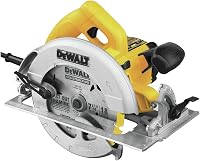
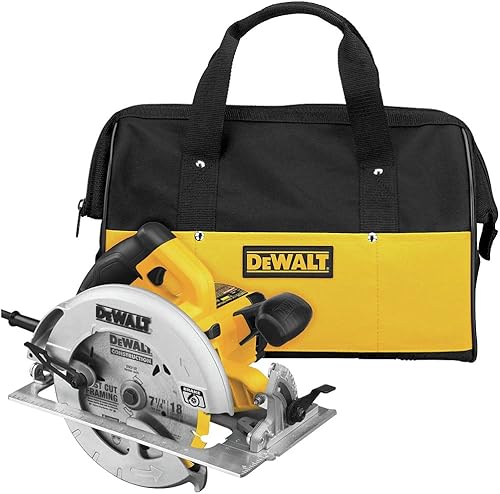
Choose a top handle saw if that grip feels natural and its weight and features suit your cuts. The DeWalt DWE575SB is the top handle option in this comparison.
It weighs 8.8 lb and has a 15 A corded motor, an electric brake and bevel capacity up to 57°. An integrated dust blower helps clear its line of sight while cutting.
That combination may fit a workshop or job where a corded tool is practical and a lighter listed weight matters. Check how the handle feels to you, since weight alone doesn't tell you how balanced or comfortable a saw will be in your hands.
For a general look at saw sizes and uses, start with our circular saw guide. If you are new to the tool, the beginner walkthrough covers basic setup and cutting steps.
When should you pick a rear handle saw?
Pick a rear handle saw if its grip position fits your stance and the tool's power source fits your work area. The Skilsaw and Makita offer different versions of that choice.
The corded Skilsaw SPT77WML-01 has a 15 A motor, a cut-ready depth system and a 53° bevel. Its listed weight is 11.5 lb, so consider the extra weight if you'll make many cuts or carry the tool between work areas.
The Makita XSR01Z is a battery powered rear handle saw. Its brushless motor is rated at 5,100 RPM, and it has a 2-9/16 in cutting capacity at 90° and an electric brake.
Makita says the tool uses two 18 V LXT batteries, which are sold separately with the charger. Its battery platform can be a deciding factor if you already use compatible tools; otherwise, include the batteries and charger in your setup plan.
The Makita's listed weight is 12.1 lb, while its description gives 12.4 lb with batteries. Treat the actual setup weight as a factor to check before buying, since the tool-only figure doesn't include the batteries.
How do weight and power source affect the choice?
Choose by the complete setup you will handle, including the cord or batteries. Among these options, the DeWalt is listed at 8.8 lb, the Skilsaw at 11.5 lb, and the Makita tool at 12.1 lb.
The DeWalt and Skilsaw are corded electric models with 15 A motors. A cord gives you a continuous connection to a suitable outlet, but you need to manage its path as you move around the work.
The Makita removes the cord during cutting, but it requires two 18 V LXT batteries. The tool is sold without batteries and a charger, so check what you already own before choosing it.
If you are deciding between power sources as well as handle styles, compare corded and cordless circular saws. That choice can narrow the field before you weigh grip and bevel features.
Which saw gives you more bevel range?
The DeWalt has the widest stated bevel capacity here at 57°. The Skilsaw and Makita each list bevel capacity up to 53°.
A higher maximum angle can help when your project calls for a bevel beyond 45°. The DeWalt also has stops at 45° and 22.5°, while the Makita lists positive stops at 22.5°, 45° and 53°.
The Skilsaw's cut-ready depth system is a separate feature for setting depth. Bevel range and depth adjustment solve different setup needs, so compare the one your planned cuts require.
Don't choose by the maximum angle alone. Check the manual for how to set and secure the saw, and make a test cut in scrap material when you need to confirm an angle.
What should you check before buying?
Match the saw to your usual material, cut setup and available power. The handle should feel comfortable while you can keep the work supported and your hands clear of the blade path.
Check the cut depth and bevel range against the material and angles you expect to cut. The Makita lists a 2-9/16 in capacity at 90°, and the DeWalt lists a 2-9/16 in depth capacity.
For sheet goods, plan how the sheet will be supported before you start. A guide for ripping a board with a circular saw explains how to plan and guide a straight cut.
Also consider where the saw will be used. A corded model needs a suitable outlet and cord routing; a battery model needs charged compatible batteries and a plan for recharging.
How should you choose between these three saws?
Choose the DeWalt for a lighter listed weight and a 57° bevel, the Skilsaw for a corded worm drive with a depth system, or the Makita for cordless rear handle use. Let the work and handle comfort decide between those features.
The DeWalt is the most direct fit if you prefer a top handle and want a corded 15 A saw. Its 8.8 lb listed weight is lower than the other 2 choices.
The Skilsaw suits a buyer who wants a corded worm drive saw with magnesium construction and a cut-ready depth system. It is heavier than the DeWalt, so consider how long you'll hold it and how often you'll move it.
The Makita makes sense if you want a rear handle saw without a cord and can use its two 18 V LXT batteries. Account for the batteries and charger when comparing its full setup with the corded choices.
Our score weighs specs and features against what you're shopping for. You can also compare other worm drive and rear handle saws if you want to look at more options.
Which circular saw handle should you choose?
Pick the handle style that lets you guide the saw comfortably, then choose the power source and features your cuts need. A top handle isn't automatically easier, and a rear handle isn't automatically better for long cuts.
Choose the DeWalt if its lighter listed weight, electric brake and 57° bevel fit your work. Choose the Skilsaw if you want a corded worm drive with a cut-ready depth system, or the Makita if you want cordless rear handle use on the LXT platform.
For a rear handle vs top handle circular saw, grip comfort and a stable cutting setup are the practical tie-breakers. Review how to use a circular saw safely and steadily before making your first cut.
OSHA's woodworking safety guidance covers common safeguards for woodworking equipment. Follow the manual for the exact saw you choose.
Frequently asked questions
Is a rear handle circular saw better for long cuts?
A rear handle saw may feel more natural for long cuts if its grip and balance match your stance, but the handle style alone doesn't guarantee straighter results. Support the work, set the blade depth for the cut and guide the saw steadily.
A straightedge can help with repeatable cuts.
Are rear handle saws worm drive saws?
Rear handle describes where the grip sits, while worm drive describes a drive style. They often appear together, but they aren't the same term.
Check the exact saw's design and specifications instead of assuming every rear handle model has the same drive system.
Is a top handle circular saw easier to control?
Control depends on your grip, stance, the saw's weight and the workpiece support. A top handle may feel familiar to many users, while another person may prefer a rear handle.
Try to hold the tool in a comfortable position before choosing, if you can.
Should I choose a corded or battery rear handle saw?
Choose corded power if your work area has a suitable outlet and you want to avoid managing batteries during a job. Choose battery power for work away from an outlet, while checking whether the tool requires batteries and a charger that you don't already own.