Circular Saw vs Reciprocating Saw: Which Job Is Which? (October 2026)
Use a circular saw for straight cuts in boards and sheet goods; use a reciprocating saw for rough cuts, demolition and tight spaces. The right choice depends on the cut path and how much control the job needs.
On this page (9 sections)
- Circular saw vs reciprocating saw: what is the main difference?
- Which saw is better for straight cuts?
- When does a reciprocating saw make more sense?
- Which saw is easier to control?
- Which saw should you use for framing and boards?
- Which saw works better in tight spaces?
- Can either saw cut metal or plastic?
- What safety checks matter for both saws?
- Do you need both a circular saw and a reciprocating saw?
A circular saw makes controlled straight cuts in boards and sheet goods; a reciprocating saw handles rough cuts, demolition and tight spaces. In a circular saw vs reciprocating saw choice, the cut path matters more than the tool's size or power source.
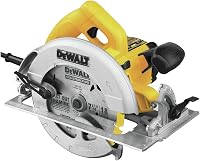
A circular saw has a round blade under a flat shoe that rests on the work. A reciprocating saw moves a narrow blade back and forth, so it can reach into openings and cut along less predictable paths.
Choose by the work ahead: use a circular saw for a straight rip in plywood, and a reciprocating saw to shorten a pipe or cut through an awkward framing section. The two tools solve different problems.
Circular saw vs reciprocating saw: what is the main difference?
The circular saw guides a round blade across a supported surface, while the reciprocating saw pushes a narrow blade through material with a back-and-forth stroke. That difference shapes the cut and the jobs each tool handles well.
The circular saw's shoe rides on the board or panel as you advance the blade. This makes it easier to follow a marked line, especially with a guide, but the workpiece needs stable support and room for the saw's base.
A reciprocating saw's blade sticks out ahead of the body. You can bring it to a cut in a wall opening, between studs or around an existing assembly, where a circular saw's shoe may not sit flat.
Neither tool makes every cut clean by itself. Blade choice, material support and steady handling all affect the result.
Which saw is better for straight cuts?
A circular saw is the better choice for long, straight cuts in boards and sheet goods. Its shoe provides a stable reference surface, and a straightedge can help keep the cut on line.
For a rip cut, mark the line and support the offcut so it won't pinch the blade. A clamped guide can improve consistency; see how to make a circular saw guide for a simple approach.
A reciprocating saw can cut a board to length, but its flexible blade can wander. It's better suited to a rough opening or a cut where the finished edge will be trimmed or hidden.
Can a circular saw cut plywood cleanly?
A circular saw can cut plywood cleanly when the panel is supported and the saw is guided steadily. For a cleaner edge, choose an appropriate blade and keep the panel from sagging during the cut.
Our guide to cutting plywood with a circular saw covers panel support and cut setup. For repeatable straight cuts, a guide can help limit drift.
When does a reciprocating saw make more sense?
Choose a reciprocating saw for demolition, rough trimming and cuts where access matters more than a perfectly straight edge. Its narrow blade can reach into spaces that won't fit a circular saw's shoe and guard.
It can be useful for removing a board from a frame, cutting a pipe or trimming a branch. The blade can also reach behind trim or between studs when the cut is clear of hidden services.
The flexible blade is an advantage in cramped work, but it needs control. Keep a firm grip, support the material where possible and use a blade suited to what you're cutting.
Is a compact Hackzall enough for tight work?
A compact one-handed reciprocating saw can suit tight spaces and overhead cuts. Milwaukee's 2625-20 M18 Hackzall has a one-handed design, anti-vibration handle, built-in LED and tool-free blade clamp.
A compact saw is not the same as a circular saw for finish work. If the cut edge will remain visible, use a guided circular saw cut or plan to trim and sand the edge.
Which saw is easier to control?
A circular saw is easier to guide along a straight line; a reciprocating saw is easier to position in an awkward opening. Control means something different for each tool.
With a circular saw, the work rests under the shoe while you steer the tool forward. That stable contact helps on straight cuts, but a tilted base or unsupported panel can send the cut off line.
With a reciprocating saw, the blade contacts the work at the point you're cutting. This helps in confined spots, but the blade can flex if you push hard or hold the tool at an angle.
Take time to set up either cut. Clamp loose material, keep your hands clear of the blade path and follow the tool's manual and safety instructions.
Which saw should you use for framing and boards?
Use a circular saw for straight framing cuts and a reciprocating saw when you need to remove or trim a piece in place. The choice depends on whether the lumber is loose and supported or fixed within a structure.
For cutting studs or boards before assembly, a circular saw gives you a more predictable crosscut. For a board that must be cut from a wall or a tight framing corner, a reciprocating saw can reach where a circular saw won't fit.
If you want a first look at circular saw setup and safe handling, read our circular saw walkthrough for beginners. For common applications, what a circular saw is used for helps match the tool to the task.
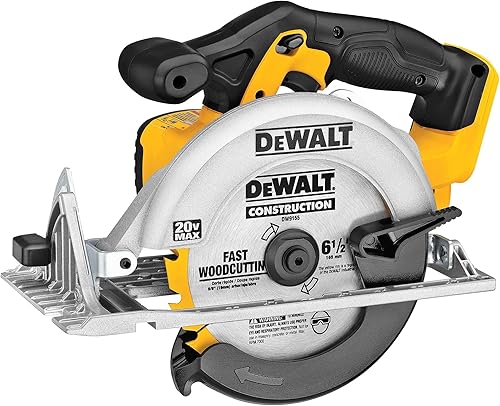
The DeWalt DCS391B 20V MAX Circular Saw has a 6-1/2 in blade, a magnesium shoe and a rubber overmolded grip. Its battery and charger are sold separately.
Which saw works better in tight spaces?
A reciprocating saw usually fits tight spaces better because its blade can reach ahead of the tool body. A circular saw needs room for its shoe and blade guard to sit and move safely.
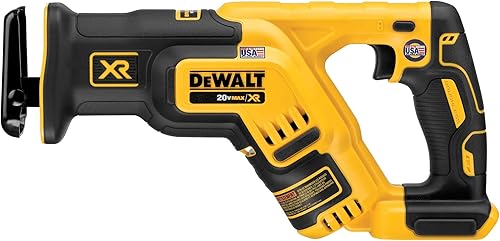
The DeWalt 20V MAX XR Compact Reciprocating Saw measures 14.5 in long and has a four-position blade clamp, variable speed trigger and built-in LED. Those features suit cuts between studs and in other cramped areas.
Check the space before cutting, especially during demolition. Walls and floors can hide wiring, plumbing and fasteners, so don't start a blind cut where those hazards may be present.
Can either saw cut metal or plastic?
Either type may cut metal or plastic with a blade made for that material, but access and cut shape guide the choice. A reciprocating saw is often easier to position for pipe and demolition cuts; a circular saw is useful when the material is flat and the cut is straight.
For plastic pipe in an open area, a reciprocating saw can be maneuvered around the pipe. For sheet material, choose a tool and blade intended for that material, and support it so the cut won't bind.
Don't assume that a wood blade suits metal or plastic. Check the blade maker's instructions and the saw manual for compatible materials and operating limits.
What safety checks matter for both saws?
Secure the work, use the right blade and keep clear of the blade path before cutting. Wear suitable eye and hearing protection, and follow the instructions for the exact saw and blade.
For a circular saw, check that the guard moves freely and that the shoe sits flat. Position the work so the blade won't contact a support, clamp or surface below the cut.
For a reciprocating saw, inspect the blade and clamp, and keep the shoe pressed against the work when the saw design allows it. This helps reduce blade movement and gives you better control.
Disconnect the battery or power source before changing blades. If you're cutting into a wall or assembly, identify what's behind it before starting.
Do you need both a circular saw and a reciprocating saw?
You need both when your projects regularly include accurate straight cuts and rough cuts in tight or fixed locations. If you mostly do one kind of work, start with the saw that matches it.
Choose a circular saw first for plywood, boards, framing and repeatable bevel cuts. Choose a reciprocating saw first for demolition, pipe, branch trimming and reaching into openings.
The circular saw vs reciprocating saw decision is simple: pick the circular saw for straight, guided cuts, and the reciprocating saw for access and removal. For other cutting comparisons, see circular saw vs chop saw.
Sources:
- DEWALT DCS391B product information
- DEWALT DCS367 product information
- Milwaukee 2625-20 product information
Frequently asked questions
Which saw makes straighter cuts?
A circular saw is usually the better choice for straight cuts in boards and sheet goods because its flat shoe can ride along a marked line or guide. A reciprocating saw is designed for more flexible cutting, so keeping a long, clean line takes more practice and support.
Can a reciprocating saw cut wood?
Yes. A reciprocating saw can cut wood when fitted with a suitable blade, and it is useful for rough cuts, branches, demolition and spaces where a circular saw cannot fit.
Use a circular saw when the cut needs to be straight, repeatable or clean on sheet material.
Can a circular saw do demolition?
A circular saw can make controlled cuts through accessible boards, but it is less suited to dismantling awkward assemblies or reaching between framing. A reciprocating saw's blade projects beyond its body and can work in tighter areas, though you should check for hidden wiring, pipes and fasteners first.
Is a Hackzall the same as a reciprocating saw?
A Hackzall is Milwaukee's compact, one-handed reciprocating saw design. It uses a reciprocating blade like a larger saw, but its smaller form is aimed at tight spaces and overhead cuts; it doesn't replace a circular saw for guided straight cuts in sheet goods.
Do you need both saws?
You may want both if your work includes clean framing or sheet cuts as well as demolition and rough trimming. If you mostly build with boards and plywood, start with a circular saw; if you mainly remove material in tight or awkward places, a reciprocating saw may come first.