Kreg Rip-Cut vs Accu-Cut: Which Saw Guide to Buy? (October 2026)
Choose the Kreg Rip-Cut for edge-guided cuts across boards up to 48 inches wide, or the Accu-Cut XL for guided cuts up to 100 inches long. Your saw, workpiece and preferred setup help settle the choice.
On this page (7 sections)
Choose the Kreg Rip-Cut for cuts up to 48 inches wide, or the Accu-Cut XL for guided cuts up to 100 inches long. In this Kreg Rip-Cut vs Accu-Cut comparison, the cut direction and your saw's fit matter more than the brand name.
The Rip-Cut uses an edge guide and saw sled. The Accu-Cut XL is a track guide, with a longer stated cut range.


Kreg Rip-Cut vs Accu-Cut: which fits your cuts?
Choose the Rip-Cut for width cuts that reference a board's edge; choose the Accu-Cut XL when you need a longer guided cut. Their stated cut ranges describe different jobs, so they aren't a direct measure of which guide is better.
Kreg describes the Rip-Cut as cutting up to 48 inches wide. It uses a sled that holds the saw, guide rail and edge guide, with a large handle to keep the edge guide against the material.
The Accu-Cut XL's product title gives a maximum cut length of 100 inches. That can be useful for a long straight cut across sheet material, but confirm the setup instructions and saw compatibility for your own saw before buying.
If you often break down plywood, the right choice depends on the cut you make most. Our guide to cutting plywood with a circular saw covers planning and supporting the sheet.
How does each guide attach to the saw?
The Rip-Cut has a sled that clamps to a compatible saw; the available Accu-Cut XL details don't specify its saw attachment method. Check the guide's instructions against your saw before deciding.
The Rip-Cut works best with a regular side-blade saw, corded or cordless, when its blade guard or base lets the sled clamp securely. It supports left- or right-bladed saws and users.
Kreg cautions that the Rip-Cut doesn't work with worm drive saws. A plastic upper blade guard or a bulky or oddly shaped guard can also prevent the sled from sitting flat or clamping securely.
For the Accu-Cut XL, don't assume compatibility from its name alone. Find the manufacturer's fit instructions for your saw model and check any clearance around its base, guard and motor housing.
Our guide to choosing a circular saw guide rail can help you compare guide styles and fit considerations. If you're still learning the tool, see how to use a circular saw.
Which guide is easier to set up?
The Rip-Cut suits a setup where you can clamp its sled to the saw and hold the edge guide against the work; a track guide needs its own positioning routine. The best fit depends on how you work and what you can repeat accurately.
With the Rip-Cut, the edge guide follows the board edge as you move the saw. That makes it useful when you want a consistent distance from an edge, provided the sled sits flat and remains secure.
A track guide calls for placing the guide along the cut path. The BORA NGX provides a clamp edge and an extension, and its Quick Lock clamp allows one-sided adjustment.
Those details describe the BORA model, not the Accu-Cut XL.
Before cutting, make a dry pass with the saw unplugged or its battery removed. Check the blade path, guide alignment and workpiece support, then follow the saw and guide instructions.
Which is better for plywood and sheet goods?
For a long cut along a sheet, the Accu-Cut XL's 100-inch cut length is the clearer fit; for a cut set from a sheet edge, the Rip-Cut's edge guide may fit better. Measure the required cut and plan support before choosing.
Large sheets can shift or sag if they're poorly supported. Arrange stable support on both sides of the cut, and keep the offcut from pinching the blade.
The Rip-Cut may suit repeated cuts that follow an edge, up to its stated 48-inch width. A long track guide may suit a cut that needs a longer straight path, but only if its setup works with your saw.
Our guide to making straight cuts with a circular saw guide shows another way to guide a saw. If the cuts are mostly board ripping, how to rip a board with a circular saw offers a related walkthrough.
When does the BORA NGX make more sense?
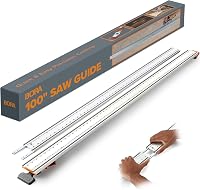
Choose the BORA NGX when you want a 100-inch clamp edge made from a 50-inch section and a 50-inch extension. Its clamp and dual T tracks give it a different setup from the Kreg guides.
The aluminum rail has a Quick Lock clamp handle for one-sided adjustment. BORA says its guide rail works with circular saws and other portable tools, including routers and jigsaws.
Its dual T tracks can add accessory options at a workbench. That may help if you want one clamped edge for more than circular saw cuts, though it adds little value if you only need a short guide.
The BORA's full length may be useful on larger sheets, but consider storage and handling before buying. A 100-inch rail needs room to position and store, and the clamp edge must be secured to the workpiece.
What should you check before buying a saw guide?
Confirm saw compatibility, the cut length you need and the guide's setup before ordering. A guide that cannot sit securely on your saw or workpiece won't help you make a straight cut.
Measure your most common workpieces and mark the cut path. Separate width cuts from long cuts, since the Rip-Cut and Accu-Cut XL describe their reach differently.
Check the base and guard shape against the guide's fit instructions. For the Rip-Cut in particular, avoid assuming fit if your saw is worm drive or has a plastic, bulky or oddly shaped upper guard.
Plan where the guide will sit, how the workpiece will be supported and where the offcut will fall. Keep hands away from the blade path, and use the saw's safety features as its manual directs.
Kreg Rip-Cut vs Accu-Cut: which should you buy?
Buy the Rip-Cut if your saw fits its sled and most cuts reference a board edge; buy the Accu-Cut XL if you need a guided cut up to 100 inches long. If you need a long clamp edge with T-track options, consider the BORA NGX.
Before choosing, match the guide to your saw model and your most common cut. For more options, compare track saws and guide rails for the money.
Frequently asked questions
What is the main difference between the Kreg Rip-Cut and Accu-Cut?
The Rip-Cut is an edge-guided sled system for cuts up to 48 inches wide, while the Accu-Cut XL is a track guide with a stated cut length up to 100 inches. Pick based on the direction and length of your cut, then check that your saw fits the guide.
Will the Kreg Rip-Cut fit any circular saw?
No. Kreg describes the Rip-Cut for regular side-blade corded or cordless saws whose guard or base lets the sled clamp securely.
It doesn't work with worm drive saws, and a plastic or bulky upper guard may interfere with clamping or alignment.
Is the Kreg Accu-Cut XL better for plywood?
The Accu-Cut XL may suit long straight cuts in plywood because it has a stated cut length up to 100 inches. The Rip-Cut can suit cuts across a board or sheet up to 48 inches wide.
Match the guide to the cut you need and support the sheet safely.
Can a guide rail replace a track saw?
A circular saw guide rail can help guide a compatible circular saw along a straight path, but it doesn't automatically make the saw a track saw. For the differences in tool design and who may need one, see our guide to what a track saw is.
Should I choose the BORA NGX instead?
Choose the BORA NGX if you want a clamp edge with a 50-inch extension, 100 inches total, and dual T tracks for accessories. It uses a clamping setup, so consider whether you have room to position and secure the rail for your work.