Plunge Cut Saw vs Circular Saw: Which Do You Need? (November 2026)
Pick a plunge cut saw for long, straight, splinter-free cuts on sheet goods and a standard circular saw for framing, rough cuts and freehand work. The plunge saw tracks a rail for precision; the circular saw wins on speed, reach and cost.
On this page (7 sections)
Pick a plunge cut saw for long, straight, splinter-free cuts on plywood and sheet goods; pick a standard circular saw for framing, rough cuts and freehand work. That is the plunge cut saw vs circular saw decision in one line.
The plunge saw trades reach and simplicity for a track-guided straight edge, while the circular saw trades precision for speed, depth and a lower cost.
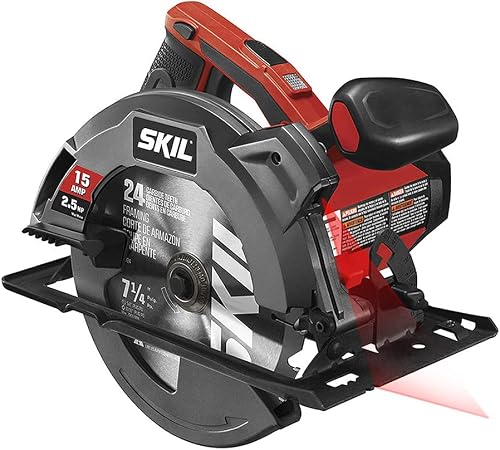
This comparison covers the two saws as most people actually buy them: a corded 7-1/4-inch circular saw against a compact plunge cut track saw. The WEN CT1065 and the Skil 5280-01 are the examples, because they show the strengths of each type clearly.
Neither saw replaces the other for every job. The question is which one matches the cuts you make most often and how much straightness matters to you.
 Best for sheet goods and long straight cuts
WEN CT1065 Plunge Track Saw
Plunge cut saw vs circular saw: the short answer
A plunge saw wins on accuracy and finish; a circular saw wins on reach, speed and cost. If you cut plywood, doors and cabinet panels and want edges that need little sanding, the plunge saw is the better tool.
If you frame walls, build decks or cut lumber to length, the circular saw does more for less.
Here is the practical split.
| Feature | WEN CT1065 Plunge Track Saw | Skil 5280-01 Circular Saw |
|---|---|---|
| Motor | 10 amp | 15 amp |
| Blade | 6.5 in, 24-tooth | 7-1/4 in, 24-tooth |
| Max depth | 2-1/3 in | Deep enough for 2x lumber |
| Bevel | 45 degrees left | 51 degrees |
| Guided cuts | Rail compatible | Straight edge or freehand |
| Best stock | Sheet goods, doors | Framing, decking, lumber |
| Dust control | Back-mounted dust port | Built-in dust blower |
The plunge saw's smaller blade and lower amperage are the trade-off for control. It is built to travel along a rail, not to power through a stack of 2x4s all afternoon.
The circular saw's bigger 7-1/4-inch blade and 15-amp motor give it more reach and more power in thick stock. It is the saw most builders reach for first.
One detail worth noticing in the table is blade speed. The WEN turns its 6.5-inch blade at up to 5,500 rpm in its top setting, while the Skil runs 5,300 RPM.
The numbers look close, but the Skil's larger blade carries more teeth past the wood per revolution, which is why it clears thick lumber faster.
How the two saws handle a cut
The plunge saw starts its cut from above the wood and drops the blade in; the circular saw runs the blade through from the edge. That difference shapes how each saw is used and what it can do safely.
On a plunge saw, the blade sits retracted in the raised position. You set the depth stop, rest the base on the stock and press down so the blade lowers into the wood.
Releasing the handle lets the spring pull the blade back into its housing.
That design is what makes the plunge saw so good on sheet goods. You can start a cut in the middle of a panel, set a scoring pass to stop splintering and lower the blade to full depth for the final pass.
The WEN's depth gauge runs from 0 to 2-1/3 inches, and its three blade settings cover scoring, full plunge and blade changes.
A standard circular saw works the other way. The blade hangs below the base and the lower guard covers it until you push the saw into the material.
Cutting starts from the edge of the board unless you plunge the saw manually.
Plunging a circular saw takes care. You tip the base so the front of the blade clears the wood, start the motor and slowly rotate the blade down.
It works, but the plunge saw's guard and depth stop make the same cut more controlled.
The base and the track
The WEN's base has precision grooves that let the saw glide along a track. The flat base also works without a track, giving you a stable platform for freehand plunge cuts.
The track itself is sold separately.
The Skil's base is designed to slide along a clamped straight edge. There is no rail system, so a straight cut on a sheet of plywood means clamping a board or a metal rule to the stock first.
The WEN's non-slip base cams are part of why it holds a line so well on a rail, since they reduce pinching and keep the saw from wandering as you push.
Bevels and depth
The WEN bevels 45 degrees to the left, cutting up to 1-5/8 inches thick in bevel mode. The Skil goes to 51 degrees with a positive stop at 45 degrees.
The Skil's extra range is useful for roof framing and steep trim cuts; the WEN's left bevel keeps the saw body clear of the rail during angled cuts.
The WEN also offers three blade settings that the Skil does not need. One setting is for scoring cuts about 1/8 inch deep, one for full plunge cuts, and one for blade changes.
On a circular saw, depth is set with a lever and a scale, and blade changes use a spindle lock and an on-tool wrench.
Which saw makes straighter, cleaner cuts?
The plunge saw on a track makes the straighter, cleaner cut almost every time. A track acts as a long straight edge that the saw follows, so the blade stays on the line for the full length of a panel.
The WEN also supports a scoring pass, a shallow first cut that breaks the surface fibers before the full-depth cut.
That scoring pass matters on plywood and melamine. The top veneer tends to splinter when a blade exits the cut with force.
Cutting a shallow groove first gives the fibers a clean line to break along.
The circular saw relies on you or a clamped edge. A straight edge and a steady hand can produce a good cut in plywood.
But over 8 feet of travel, small drift adds up, and the blade's lower guard does not help hold the line.
Freehand circular saw cuts are fine for framing, where the cut is hidden or covered. They are less fine for cabinet panels and visible shelving.
The Skil's single-beam laser guide and dust blower help here, since the laser shows the line and the blower keeps sawdust from hiding it. That makes a circular saw easier to follow freehand, though it still cannot match a rail over a long rip.
Which saw cuts deeper and through thicker stock?
The circular saw wins on depth. Its 7-1/4-inch blade is the standard size for cutting 2x lumber in one pass.
The Skil's 15-amp motor and 5,300 RPM spin that larger blade through thick, dense stock.
The WEN's 6.5-inch blade plunges to 2-1/3 inches. That covers most sheet goods and trim, but it is not built to crosscut a 2x10 or a thick post in one go.
For decking, fence posts and stud walls, the extra depth of the 7-1/4-inch circular saw is the practical reason to own one. A plunge saw can cut thick stock in steps, but that is slower and less accurate.
The WEN's bevel depth of 1-5/8 inches at 45 degrees is fine for trim and shelf edges, but it will not see through a 2x4 on an angle in one pass.
Which is easier to use all day?
The circular saw is the simpler tool to grab and cut with; the plunge saw rewards setup with better results. The Skil weighs 8.7 pounds, has a dust blower to keep the cut line visible and a single-beam laser guide.
It starts and cuts without much thought.
The WEN needs a little more planning. You set the depth, position the track or the base, and check the rail is clamped.
That setup takes seconds on a long rip and pays back in a straight edge.
For repeated cuts of the same size, the plunge saw's depth stop makes every cut identical. For one-off framing cuts, the circular saw's speed and reach are hard to beat.
Cord and portability
Both saws run on a cord, so each needs an outlet and a free extension cord. The Skil's cord limits how far you can move from the outlet on a job site.
The WEN has the same limit, and the track adds a length of rail to carry and set up on each cut. That makes the plunge saw less convenient to move around a deck build and more at home where the stock sits flat in one spot.
Noise and dust
Both saws are corded and loud. The WEN's back-mounted dust port connects to a shop vacuum, which keeps sheet-good dust under control in a workshop.
The Skil's dust blower clears the line of cut but sends dust into the air.
If you work in a garage or a small shop, the plunge saw's dust port is a real comfort advantage.
Which saw should you buy?
Buy the plunge saw if your work is sheet goods, doors and cabinet panels that need clean, straight edges. Buy the circular saw if you frame, deck, cut lumber or need one saw that covers most rough jobs.
Pick the WEN CT1065 Plunge Track Saw if...
You cut plywood, MDF, melamine or door slabs and want edges that are straight and splinter-free. You are building cabinets, shelves or furniture and want repeatable cuts without clamping a straight edge for every piece.
You work in a shop and want a dust port for a vacuum. You are willing to buy the track separately for long rips.
The WEN also suits anyone who wants plunge cuts in the middle of a panel, such as cutting an opening for a sink or a vent. The depth stop and scoring setting make that a controlled cut.
Its flat base also works for trimming door jambs and cabinet edges, the short precision cuts a circular saw is awkward to make.
Pick the Skil 5280-01 Circular Saw if...
You frame walls, build decks, cut fence posts or trim lumber to length. You want one saw that handles most jobsite cuts without a rail.
You want the extra reach of a 7-1/4-inch blade and the power of a 15-amp motor. You are watching the budget and want the lower-cost tool first.
The Skil's 51-degree bevel also helps on roof framing and steep trim, where the plunge saw's 45-degree limit is not enough. The laser guide and dust blower make freehand cuts easier to follow.
If you can only own one
A circular saw is the better first saw for most people. It covers framing, decking and general lumber cuts and costs less.
Add a plunge saw later when your work shifts toward sheet goods and fine edges.
If your work is already cabinet and panel heavy, start with the plunge saw. The track makes straight cuts so much easier that the circular saw becomes the second tool.
A note on the other saw types
The circular saw has close cousins that overlap with it. Our circular saw vs chop saw comparison covers when a stationary crosscut saw beats a handheld one.
If you are weighing brands for a circular saw, the DeWalt vs Milwaukee circular saw breakdown helps match a model to your work. And when you need to cut into a wall or dismantle something, the circular saw vs reciprocating saw guide shows which tool belongs in your hand.
One more choice matters before you buy a circular saw: blade side. Our left blade vs right blade circular saw guide explains which side puts the blade where you can see it.
It matters more than most people expect, especially for right-handed users making freehand cuts.
Verdict: which saw fits your work?
For most readers who cut lumber and build, the circular saw is the better buy; for sheet goods and clean edges, the plunge saw earns its place. The plunge cut saw vs circular saw choice comes down to your most common cut and how much straightness matters.
The Skil 5280-01 covers framing, decking and general lumber work with a 15-amp motor and a 7-1/4-inch blade. It is the simpler, lower-cost tool and the one most people should own first.
The WEN CT1065 is the better tool when plywood, doors and cabinet panels dominate your work. Its track-guided cuts and scoring pass produce edges a circular saw struggles to match.
Add the track to your order and it becomes a proper track saw.
If your work spans both, own the circular saw now and add the plunge saw when your projects turn toward sheet goods. That order keeps you cutting on day one and gives you the finer tool when the work calls for it.
Frequently asked questions
Can a circular saw make a plunge cut?
A circular saw can plunge, but only carefully. You tip the front of the base onto the wood, then rotate the blade down slowly while it runs.
A plunge saw does the same job in a controlled way, with a spring-loaded guard and depth stops set before the blade enters the stock.
Do I need a track to use a plunge saw?
No. The WEN CT1065 works as a plunge saw on its flat base without a track.
A track is what turns it into a track saw: a straight edge that keeps the blade on the line for long rips.
For long plywood cuts, buy the track with the saw.
Is a plunge saw safer than a circular saw?
Each saw has its own guards, and safe use still depends on you. A plunge saw's retracting guard covers the blade between cuts and its depth stop limits how far the blade goes down.
A circular saw's lower guard does the same in normal cutting, but it takes more care to plunge it into the middle of a panel.
Which saw cuts a straight line more easily?
A plunge saw on a track. The track acts as a straight edge, so you set the rail on your line and push the saw along it.
A circular saw needs a clamped straight edge, a fence or a steady freehand hand to match that.
For cabinet and sheet-good work, the plunge saw removes the guesswork.
Can one saw do both framing and fine sheet cuts?
A circular saw is the better all-rounder if you buy one saw. It handles framing, decking and rough work in one tool.
A plunge saw is the finer tool, but framing with it means lifting and setting a rail or working freehand.
Most woodworkers who do both own a circular saw and rent or add a track saw later.
How deep does each saw cut?
The Skil 5280-01 takes a 7-1/4-inch blade, so it reaches deeper into thick lumber. The WEN CT1065 plunges to 2-1/3 inches and cuts 1-5/8 inches at a 45-degree bevel.
For 2x framing stock, the bigger blade is the simpler choice.