Bauer vs Hercules Circular Saws: Which Is Better? (November 2026)
For most home projects, the higher-scoring DeWalt DCS391B is the safer buy; between a Bauer and an Hercules, match the saw to your power source. Corded Bauer runs all day without batteries, while the Hercules compact cordless saw trades blade size for portability.
On this page (8 sections)
- The quick verdict: which saw wins for most homes?
- Bauer vs Hercules: the two side by side
- Which power source fits your home projects?
- Blade size: what each line can actually cut
- Bevel capacity and cut accuracy
- Weight, handling and everyday use
- Blades, brakes and the small features that matter
- Which saw should you buy?
Pick the higher-scoring DeWalt DCS391B if you want one saw that handles most home projects, and treat a Bauer vs Hercules circular saw choice as a question of power source. Corded Bauer saws cut all day without batteries, while an Hercules compact cordless saw goes where no outlet reaches.
This comparison puts two Harbor Freight budget lines next to the DeWalt and Skil saws most homeowners shortlist. We checked the specs and features, not the paint color, so you can see which needs each saw meets.
None of these tools is a pro-grade framer's saw. They're built for decks, shelving, trim and the occasional sheet of plywood, and that's where the decision is easiest.

The quick verdict: which saw wins for most homes?
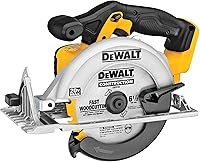
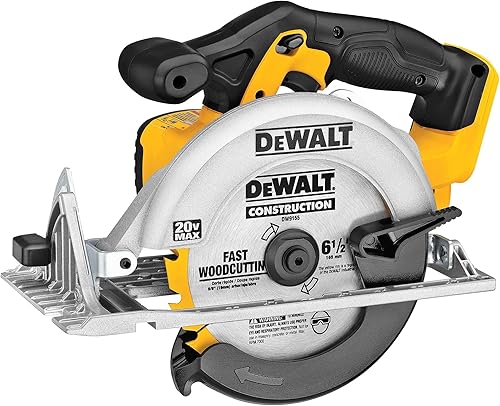
The DeWalt DCS391B is the best overall pick because it balances a 6-1/2 in blade, a 5,150 rpm motor and a 0–50° bevel. It scores 8.9 and covers the widest range of home cuts with one tool.
Between Bauer and Hercules specifically, the answer depends on how you work. A corded Bauer saw with a full 7-1/4 in blade suits anyone cutting sheet goods near an outlet.
An Hercules compact cordless saw suits quick cuts up high, in a yard or in an attic.
If you already own Harbor Freight 20V batteries, the cordless path is cheaper to enter. If you don't, a corded Bauer or a corded Skil avoids buying batteries at all.
The table below sorts the four saws by score, with the two budget lines represented by the corded and cordless patterns that map onto them.
Bauer vs Hercules: the two side by side
Bauer's strength is corded power at a low entry cost, and Hercules' strength is a compact cordless body that still cuts 2x material. The table below maps those traits onto the four saws compared here.
| Feature | Bauer pattern (corded) | Hercules pattern (compact cordless) |
|---|---|---|
| Power source | Corded, runs as long as you cut | 20V battery, tool only or kit |
| Typical blade | 7-1/4 in full size | 4-1/2 in compact |
| Bevel | Up to 51° on corded saws | Up to 45° on compact saws |
| Weight feel | Heavier, balances on the workpiece | Light, easy to hold overhead |
| Best use | Decks, sheet goods, long runs | Trim, quick cuts, tight spaces |
The corded column is represented here by the two Skil saws, which show what a full-size corded blade buys you. The cordless column is represented by the DeWalt ATOMIC, the compact saw closest in shape to an Hercules.
The DeWalt DCS391B sits between them: a cordless 6-1/2 in saw that still carries a magnesium shoe and a deep bevel. If you want one saw rather than a pair, that middle point is where most readers land.
What the blade count and teeth tell you
The tooth count on each saw hints at the finish it leaves. The DeWalt DCS391B runs an 18-tooth blade on a 6-1/2 in body, which is a general-purpose grind for framing and plywood.
The DeWalt ATOMIC carries 24 teeth on its 4-1/2 in blade. That denser tooth pattern on a small blade is a smoother cut in trim and finish lumber, where tear-out matters more than speed.
The two Skil saws split as well. The 5280-01 ships a 24-tooth carbide blade, and the 5080-01 includes an 18-tooth carbide blade.
Fewer teeth cut faster and rougher, so the 18-tooth blade suits rough framing while the 24-tooth suits cleaner work.
Which power source fits your home projects?
If most of your cutting happens near an outlet, corded Bauer wins; if you cut in a yard, attic or on a half-built deck, cordless Hercules wins. This one question decides more than any spec.
A corded saw never runs flat and never needs a charger. That matters when you're ripping a stack of plywood for a shed floor and don't want to stop.
Cordless freedom costs batteries and runtime. A compact Hercules body is light enough to hold overhead for soffit or fence work, where dragging a cord is a nuisance.
Our corded vs cordless circular saw breakdown walks through runtime, weight and outlet access in more detail. Read it if you're still torn after this section.
When a corded Bauer is the smarter buy
A corded Bauer suits decks, shelves and any job where the material stays close to power. You plug in once and cut until the job is done.
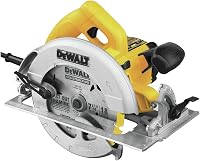
The Skil 5280-01 shows the shape of that saw: a 15 amp motor at 5,300 rpm turning a 7-1/4 in carbide blade. That blade size gives you depth for 2x lumber in a single pass.
The trade-off is the cord itself. It snags on sawhorses, needs an extension for a long deck and limits where you can stand.
In a garage or workshop, none of that matters.
When a cordless Hercules makes more sense
A cordless Hercules suits trim, fencing, firewood and cuts made away from the bench. The compact body and light weight make it easy to carry up a ladder.
The DeWalt ATOMIC shows the pattern: a brushless motor, a 4-1/2 in blade and a bevel gear that lets it cut 2x material at 90 degrees. Small blades still do real work when the gear is designed for it.
Battery platform matters here. If you already run Harbor Freight 20V tools, an Hercules tool-only body plugs into batteries you own.
If not, price a kit or a battery and charger before you decide.
Runtime is the number to watch on the cordless side. The DeWalt ATOMIC's brushless motor is rated to cut up to 369 linear feet of 3/4 in OSB on a DCB205 battery, which is a useful yardstick for how far one charge stretches on a compact saw.
Blade size: what each line can actually cut
A full-size 7-1/4 in blade cuts deeper than a compact 4-1/2 in blade, but a bevel-gear compact saw still handles 2x dimensional lumber at 90 degrees. Choose by the thickest material you plan to cut.
Full-size corded saws are the pick for 2x framing, thick decking and ripping sheet goods. The blade reaches through the board in one pass, so the motor isn't working against a short cut.
Compact cordless saws trade depth for portability. A 4-1/2 in blade won't rip a 2x10, but it will crosscut a 2x4 cleanly when the saw is built for it.
The DeWalt DCS391B lands at 6-1/2 inches, which covers most home cuts short of deep rips. Its 18-tooth blade and 5,150 rpm motor suit general lumber and plywood.
An Hercules compact saw is the tool to grab for a quick cut on a fence picket or a piece of trim. Keep a corded Bauer or Skil for the board you can't afford to cut twice.
Depth of cut at a glance
The rated depth follows the blade size on each saw here. A 7-1/4 in corded saw cuts deepest, the 6-1/2 in DeWalt DCS391B comes next, and the 4-1/2 in ATOMIC cuts shallowest.
That ordering is why a compact saw is not the tool for ripping a stack of 2x stock. Its bevel gear lets it crosscut 2x at 90 degrees, but the small blade limits how deep the cut can go.
The DeWalt DCS391B's own spec sheet lists a 6-1/2 in blade, and the ATOMIC's lists a 4-1/2 in blade. The ATOMIC's spec table also lists a 2 in blade length, which is the blade's exposed cutting depth, not its diameter.
Read both figures before you assume a small saw can't do the job.
Bevel capacity and cut accuracy
Corded Bauer saws often reach a 51° bevel with a positive stop at 45°, while compact Hercules saws usually cap at 45°. More bevel range helps on roofs and angled trim.
The Skil 5280-01 gives 51° of bevel with a positive stop at 45°, which covers most rake cuts and angled shelving. The DeWalt DCS391B goes to 50°, close enough for home work.
A compact cordless saw at 45° still cuts 1x dimensional lumber on the bevel. That's enough for fascia, trim and simple angles, but not for steep roof cuts.
Accuracy comes from more than the bevel scale. The Skil's single-beam laser guide and dust blower help you follow a line, and the DeWalt's magnesium shoe holds its shape under load.
If you're cutting angles all day, a corded saw with a 51° bevel and a clear line is the easier tool. For one or two angled cuts, the compact cordless saw is fine.
Depth control and the shoe
A sturdy shoe keeps the saw flat on the workpiece. The DeWalt DCS391B uses a high-strength magnesium shoe, which is light and holds cut accuracy over time.
Corded Bauer saws lean on a stamped or cast base that is heavier but stable. Either way, set the depth so the blade clears the board by about a quarter inch.
A sloppy depth setting is the most common cause of a rough cut. Check it before each change of material, especially when moving from plywood to 2x stock.
Weight, handling and everyday use
Compact cordless saws are lighter and easier to hold overhead; corded full-size saws are heavier but balance on a bench. Pick by where you'll stand while cutting.
The DeWalt ATOMIC weighs 6.5 pounds and includes a removable auxiliary handle for control. That handle helps on long crosscuts where the small body wants to wander.
The Skil 5080-01 is 15% lighter than the 5380 it replaces, which cuts fatigue on a long shelving job. It's still a corded full-size saw, so the cord is the thing you manage.
Grip matters more than a number on a scale. The DeWalt DCS391B uses a rubber over-molded grip that keeps your hand steady when the blade loads up.
Its spec sheet lists the tool at 3.16 kg, and the body measures 15.5 in long by 8.5 in wide by 10.5 in high.
If you cut on a bench most days, the weight of a corded saw is an asset. If you cut on a ladder or in a crawlspace, the compact cordless body wins.
Blades, brakes and the small features that matter
A blade brake and a spindle lock save time and fingers; check which saw has them before you buy. These are the details that separate a pleasant tool from a fussy one.
The DeWalt ATOMIC has an electronic blade brake that stops the blade quickly, plus on-board blade key storage and a dust port. The DeWalt DCS391B offers keyless blade changes.
The Skil 5280-01 and 5080-01 both use a spindle lock and an on-tool wrench for blade changes. The 5280-01 also carries a safety lock and a power-on indicator.
Dust control is worth a thought. The Skil saws use a dust blower to keep the cut line clear, and the ATOMIC adds a dust port for a vac connection.
The ATOMIC also includes a rip fence and a dust port adaptor in the box.
The DeWalt DCS391B adds a hang hook only on the ATOMIC, which is a small thing until you're working off a ladder or a scaffold and need both hands free.
None of these features change the cut quality by themselves. They change how often you stop, curse and reset, which is the real cost of a cheap saw.
Which saw should you buy?
Buy the DeWalt DCS391B for most homes; buy a corded Bauer or Skil if you cut near outlets all day; buy a compact Hercules if you work away from power. That's the short version of the bauer vs hercules circular saw call.
The DeWalt DCS391B earns the overall pick with a 6-1/2 in blade, a 5,150 rpm motor, a magnesium shoe and a 0–50° bevel. It's the one saw that handles decks, shelving and trim without a second purchase.
Choose a corded Bauer if your work stays in a garage, shop or beside the house. A 15 amp saw with a 7-1/4 in blade, like the Skil 5280-01, rips sheet goods and cuts 2x stock fast.
Choose a compact Hercules if you already own Harbor Freight 20V batteries. The DeWalt ATOMIC shows the compact cordless pattern: light, brushless and able to cut 2x at 90 degrees.
If you're still weighing one saw against another type, our circular saw vs reciprocating saw guide explains which tool does which job. And if brand loyalty is the sticking point, the DeWalt vs Milwaukee circular saw comparison and DeWalt vs Bosch circular saw comparison carry the same spec-first approach.
For a home workshop, the safe answer is a corded saw plus a compact cordless one when the budget allows. If you can only buy one, the DeWalt DCS391B covers the most ground.
Our score weighs specs, features and buyer fit against what you're shopping for, so a higher number means a better match for home projects rather than a lab test. Match the saw to the outlet, the material and your hands, and the choice gets simple.
Frequently asked questions
Is Bauer or Hercules better for a homeowner?
For most homeowners the corded Bauer suits steady jobsite cuts, while an Hercules cordless saw wins when you work away from outlets. Match the power source to your space, then buy the blade size you actually use.
Do Bauer and Hercules saws share batteries?
Both lines run on Harbor Freight's 20V battery platform, so a battery you already own for one tool can power the other. Buy the tool only if you already have batteries and a charger, or price in a kit.
Can a compact cordless saw cut 2x lumber?
Yes, some compact saws use a bevel gear to cut 2x material at 90 degrees with a small blade. Check the saw's rated cut depth rather than guessing from the blade size alone.
Should I pick corded or cordless for home projects?
Corded for long days of cutting sheet goods where an outlet is close, cordless for quick cuts in a yard or attic. Many owners keep one of each; our corded vs cordless guide explains the trade-off.