DeWalt vs Bosch Circular Saw: Which Is Better? (November 2026)
Pick DeWalt if you want a 20V cordless saw that handles 2x material and deep bevels; the DeWalt DCS391B is the better all-round pick for most woodworkers. Bosch's corded and cordless line competes on value, but on the specs we can compare here, DeWalt's 6-1/2 in platform and its compact 4-1/2 in ATOMIC saw give you more reach into framing and trim.
On this page (9 sections)
- DeWalt vs Bosch circular saw: which one is the better buy?
- The two DeWalt saws side by side
- Blade size and cut depth: the first decision
- Bevel range: how far each saw tilts
- Cordless freedom or corded power?
- Weight, balance and control
- Who should buy which saw?
- Bosch's place in this comparison
- Which is better for you?
Pick DeWalt if you want a 20V cordless saw that handles 2x material and deep bevels; the DeWalt DCS391B is the better all-round pick for most woodworkers. Bosch's corded and cordless line competes on value, but on the specs we can compare here, DeWalt's 6-1/2 in platform and its compact 4-1/2 in ATOMIC saw give you more reach into framing and trim.
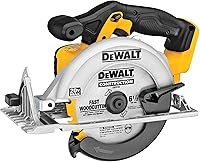
The DeWalt DCS391B pairs a 5,150 rpm motor with a 0 to 50 degree bevel and a lightweight magnesium shoe. That mix of speed, bevel range and control covers framing, sheet goods and most jobsite angle cuts.
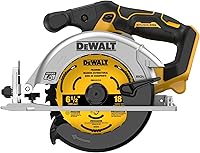
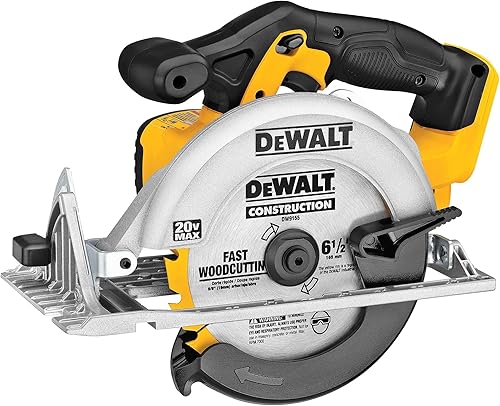
The DeWalt ATOMIC DCS571B covers the other end. Its 4-1/2 in blade and bevel gear let it cut 2x material at 90 degrees in a small, brushless package built for trim and overhead work.
This DeWalt vs Bosch circular saw comparison focuses on the specs that change your buying decision: blade size, cut depth, bevel range, motor type and what you get in the box. The two Skil saws here are corded benchmarks, since Skil is a separate brand and the models below are corded alternatives that help frame the corded side of the choice.
 Best for tight trim work
DeWalt ATOMIC DCS571B 4-1/2 Inch Circular Saw
DeWalt vs Bosch circular saw: which one is the better buy?
DeWalt wins overall for most buyers, because its cordless saws here combine speed, bevel range and a light shoe in one platform. The DCS391B is the model to start with if you want one saw that frames, sheets and bevel cuts without a cord.
Bosch's circular saws also earn a place, and you'll find good corded and cordless options in its range. The honest limit of this comparison is that Bosch's matching models aren't in the product data we have here.
So this post weighs the DeWalt saws against each other and against the corded Skil alternatives, and it tells you when Bosch's approach is the one to price out.
The decision breaks into four points that decide the choice: blade size and cut depth, bevel range, cordless freedom against corded power, and weight and control. Each gets its own section below.
The two DeWalt saws side by side
The DCS391B is the bigger, more versatile saw; the ATOMIC DCS571B is the compact specialist. One covers framing and sheet goods, the other covers trim and tight spaces.
| Feature | DeWalt DCS391B | DeWalt ATOMIC DCS571B |
|---|---|---|
| Blade size | 6-1/2 in | 4-1/2 in |
| Motor | 5,150 rpm brushed | Brushless |
| Bevel range | 0 to 50 degrees | 45 degrees |
| Weight | 3.16 kg | 6.5 lb |
| Best use | Framing, sheet goods, bevel cuts | Trim, overhead work, tight spots |
| Battery | Sold separately | Sold separately |
The DCS391B runs an 18-tooth, 6-1/2 in high speed steel blade. Its 0 to 50 degree bevel and keyless blade change make it the more flexible of the two.
The ATOMIC uses a 24-tooth blade and adds a few things the bigger saw doesn't list: a brushless motor, an electronic blade brake, a removable auxiliary handle, a hang hook and a dust port.
How do the two DeWalt saws differ in the hand?
The DCS391B has an optimized rubber over-molded grip, and DeWalt builds it around balance and control. The ATOMIC's 1-1/2 in finger trigger lets you choke up on the tool for closer control.
The ATOMIC also carries its blade key on board and includes a rip fence. Small details like these matter when you make many short trim cuts in a row.
Blade size and cut depth: the first decision
Go with a 6-1/2 in blade for framing and general work; choose a 4-1/2 in blade only when portability matters more than depth. Blade size sets how deep the saw reaches into lumber and sheet goods.
The DCS391B's 6-1/2 in blade clears 2x material at 90 degrees and leaves room for angle cuts. The ATOMIC's 4-1/2 in blade would normally fall short on thick stock, but its bevel gear design lets it cut 2x material at 90 degrees anyway.
That bevel gear is the key detail. It angles the motor so the smaller blade still reaches through a 2x4, which is why a 4-1/2 in saw can handle framing lumber in the right hands.
The ATOMIC's 45 degree bevel also cuts 1x dimensional lumber. So a compact saw covers trim and light framing, just not the full depth or bevel range of the bigger model.
When does a 7-1/4 in corded saw make more sense?
The Skil 5280-01 runs a 7-1/4 in blade and a 15 amp motor. That gives it the deepest reach of the saws here, which suits thick stock, repeated full-depth cuts and shop work near an outlet.
If your work is mostly heavy lumber and you don't move far from power, a corded 7-1/4 in saw is the practical pick. Our DeWalt vs Makita cordless circular saw comparison covers another cordless rival if you're weighing battery platforms.
Bevel range: how far each saw tilts
The DCS391B tilts from 0 to 50 degrees, while the ATOMIC stops at 45 and the corded Skil saws reach 51. More bevel means more angle cuts before you reach for a second tool.
The DCS391B's 0 to 50 degree range covers aggressive bevels for a range of applications. That's enough for most deck, roof and trim angles, and the keyless blade change makes switching blades quick when a cut calls for a different tooth count.
The ATOMIC's 45 degree bevel handles 1x lumber at an angle. For steeper cuts, the bigger DeWalt or a corded saw is the better tool.
Where the 45 degree stop matters
The Skil 5080-01 offers a 51 degree bevel with a positive stop at 45 degrees. The stop is a useful feature on repeated 45 degree cuts, since the saw locks into the angle instead of relying on the scale.
The ATOMIC doesn't list a positive stop. If you cut a lot of 45 degree trim, plan to check the angle as you set it.
Cordless freedom or corded power?
Pick cordless DeWalt when you move around a site or work away from outlets; pick a corded saw when you stay near power and want full-depth cuts without battery swaps. This is the point that decides more buyers than any spec.
The DCS391B and the ATOMIC both run on 20V MAX batteries, and both are sold as tool only. You supply the battery and charger, or use ones you already own in the 20V MAX platform.
Cordless saws free you from a cord, but they add battery management to your day. A spare battery keeps a cut session going when the first one runs down.
Corded saws trade that freedom for steady power. The Skil 5280-01's 15 amp motor delivers its full output from the outlet, so you don't pause for a recharge.
Who should stay corded?
Stay corded if your saw lives in a shop or a garage with an outlet close by. A 15 amp motor handles repeated full-depth cuts in thick lumber without a battery break.
Go cordless if you frame decks, cut on a roof or work in rooms without power. The DeWalt 20V line is the cleaner fit there, especially if you already own 20V MAX batteries.
Weight, balance and control
The ATOMIC is the lighter, more controlled saw in tight spaces; the DCS391B balances speed with a light magnesium shoe for jobsite work. Weight matters most when you work overhead or make many short cuts.
The ATOMIC weighs 6.5 lb and adds a removable auxiliary handle for more control. The finger trigger lets you choke up, and the electronic brake stops the blade quickly for safety and speed on repeated cuts.
The DCS391B weighs 3.16 kg. Its magnesium shoe is high strength and lightweight, which DeWalt says helps jobsite durability and long-term cut accuracy.
The rubber over-molded grip aims at balance and control.
The corded Skil 5080-01 sits at 7 lb and is 15 percent lighter than the 5380, so it reduces fatigue compared with the heavier Skil model. The Skil 5280-01 weighs 8.7 lb, the heaviest here.
What about dust and visibility?
The Skil 5280-01 uses a dust blower to keep the line of cut clear, and its single-beam laser guide helps with accuracy. The ATOMIC lists an on-board dust port for dust control.
The DeWalt DCS391B doesn't list either a laser or a dust blower. If a clear sightline is your priority on repeated cuts, the Skil 5280-01 is built around that.
Who should buy which saw?
Buy the DeWalt DCS391B for general framing and sheet goods; buy the ATOMIC for trim and overhead work; choose the Skil 5280-01 for corded full-depth cuts on a budget. Here's how each buyer lands.
The DCS391B fits the woodworker who wants one cordless saw for deck framing, plywood and bevel cuts. Its 6-1/2 in blade and 50 degree bevel cover most jobsite work, and the magnesium shoe keeps it accurate over time.
The ATOMIC DCS571B fits trim carpenters, finish work and anyone cutting overhead or in tight spots. The 4-1/2 in blade and bevel gear let it cut 2x material at 90 degrees while staying light and controlled.
The Skil 5280-01 fits the budget-conscious buyer who works near an outlet and needs full-depth cuts. The 15 amp motor and 7-1/4 in blade make it the strongest corded value here.
The Skil 5080-01 fits the buyer who wants a lighter corded saw for shelving and trim. The 13 amp motor trades some power for less weight and fatigue.
If you want to see how the DCS391B stands on its own, our DeWalt DCS391B review goes deeper into its features and who it suits.
Bosch's place in this comparison
Bosch is worth pricing out when you want a corded saw or a cordless saw in a battery platform you already own. The catch is that Bosch's matching models aren't in the product data here, so we can't line up their depth and bevel specs against the DeWalt saws.
What we can do is name what to check. Compare blade size and maximum cut depth first, since those set whether a saw handles 2x framing lumber or only trim.
Then compare bevel range and whether the saw has a positive stop at 45 degrees.
Finally, weigh battery platform. If you already own Bosch batteries, a Bosch cordless saw may cost less to add than a DeWalt one.
If you own DeWalt 20V MAX batteries, the DCS391B or the ATOMIC is the natural fit.
Our DeWalt vs Milwaukee circular saw comparison shows how a third cordless brand stacks up on the same points.
Which is better for you?
For most readers, the DeWalt DCS391B is the better buy, and this DeWalt vs Bosch circular saw comparison points there for framing, sheet goods and bevel work. It's the highest-scored saw here and the one we'd pick overall.
Buy the DCS391B if you want one cordless saw for general work and can supply a 20V MAX battery. Its 6-1/2 in blade, 5,150 rpm motor and 0 to 50 degree bevel cover the widest range of jobs.
Buy the ATOMIC DCS571B if your work is trim, overhead cutting or tight spaces. It's the compact specialist that still cuts 2x at 90 degrees.
Buy the Skil 5280-01 if you work near power and want full-depth cuts without battery swaps. Buy the Skil 5080-01 if you want a lighter corded saw for shelving and light trim.
A circular saw and a reciprocating saw do different jobs, so don't swap one for the other. Our guide to circular saw vs reciprocating saw explains which cuts each one owns.
The final rule is simple. If you move around and want cordless freedom, the DeWalt DCS391B is the pick.
If you stay near an outlet and need full depth on thick stock, price the corded Skil 5280-01 against the Bosch corded saw you're considering and buy on depth and bevel range.
Frequently asked questions
What size blade should I get for framing?
A 7-1/4 in blade gives the deepest cut and is the usual framing size. If you want cordless freedom, a 6-1/2 in saw like the DeWalt DCS391B handles most 2x framing lumber, while a 4-1/2 in saw is for trim and lighter work.
Can a 6-1/2 inch circular saw cut a 2x4?
Yes. A 6-1/2 in saw cuts a 2x4 at 90 degrees, and the DeWalt ATOMIC's bevel gear even cuts 2x material at 90 degrees with a 4-1/2 in blade.
The limit shows up on thick stock or steep bevels, where a 7-1/4 in saw reaches deeper.
Do DeWalt cordless saws come with a battery?
No. The DeWalt DCS391B and DCS571B are sold as tool only, so battery and charger are separate.
Budget for a 20V MAX battery and charger, or use ones you already own in the 20V MAX platform.
Is a corded or cordless circular saw better for a workshop?
A corded saw suits a shop where an outlet is close, since a 15 amp motor like the Skil 5280-01 delivers full-depth cuts without battery swaps. A cordless saw like the DeWalt DCS391B is better when you move around a jobsite or work away from power.