How Much Does a Circular Saw Cost?
A circular saw usually falls into three price tiers: budget, mid-range and premium. The saw's type, motor size and blade size set the tier, and cordless models carry extra cost for batteries and chargers.
On this page (7 sections)
- What price tiers do circular saws fall into?
- What does a budget circular saw give you?
- What changes when you move up to mid-range?
- When does a cordless saw make sense, and what does it cost overall?
- Which extras should you budget for?
- Does a higher price mean a better cut?
- How should you set your circular saw budget?
A circular saw usually falls into three price tiers: budget, mid-range and premium. The saw's type, motor size and blade size set the tier, and cordless models carry extra cost for batteries and chargers.
People ask how much does a circular saw cost because the answer changes with what you plan to cut. A saw for occasional deck boards and a saw for daily framing sit in different tiers, and the extras around the saw can matter as much as the saw itself.
This guide breaks down what each tier buys, what pushes a saw up a level, and what to budget beyond the saw.
What price tiers do circular saws fall into?
Circular saws split into three broad tiers: budget, mid-range and premium. The tier reflects the motor, the base, the bevel range and the brand, not a single feature.
Knowing the tier helps you match the saw to how often you'll use it.
Budget saws cover occasional cutting in softwood and sheet goods. They usually have a corded motor, an aluminum or stamped base and a basic bevel stop.
Mid-range saws add more power, a smoother base and better controls. Premium saws target daily jobsite use, with stronger motors, finer bevel stops and features like electric brakes.
The blade size also shapes the tier. A 7-1/4 inch saw is the full-size standard and covers most framing and sheet goods work.
A 6-1/2 inch saw is lighter and common in cordless models, but it trades away some cut depth. Both sizes appear in the budget and mid-range tiers, so blade size alone won't tell you the price band.
What usually separates the tiers is how the base is finished and how precisely the bevel stops lock in place.
Cordless saws sit in their own price picture because the battery and charger change the total. A bare-tool cordless saw can land near a budget corded model, but the full kit moves it toward mid-range or above.
For a closer look at how the two power types compare in daily use, see what is a circular saw used for.
What does a budget circular saw give you?
A budget circular saw gives you a working full-size blade and a corded motor for occasional cuts. It's the right tier for a first saw, a weekend project or a tool that lives in a garage and comes out a few times a year.
At this level you typically get a 7-1/4 inch blade, a 15 amp motor and a bevel range that covers common angles. The Skil 5280-01 is a clear example: a 15 amp motor at 5,300 RPM, a 7-1/4 inch carbide blade included, a 51 degree bevel with a positive stop at 45 degrees, and a dust blower.
The kit matters too. The Skil ships with the saw, a 24-tooth carbide blade, a wrench and a carry bag.
That covers the blade change and the storage side without extra spending. The single-beam laser guide helps you follow a marked line, and the dust blower keeps that line clear as you cut.
A guarded trigger with a power-on indicator adds a layer of safety for a new user.
What you give up at this tier is refinement. The base may be less smooth than a premium saw, and the bevel stops may need more care to set.
For light framing, decking and plywood, those trade-offs rarely show in the cut. See our guide to the best circular saw for DIY projects if this is your first saw.
What changes when you move up to mid-range?
Mid-range saws buy you more power, a smoother base and better bevel control. The jump is about consistency: the saw holds its line and its angle with less fuss, which matters when you cut the same part many times.
A mid-range corded saw often brings a 15 amp motor with a higher speed, a machined base and a wider bevel range. The DeWalt DWE575SB fits this tier.
It's among the lightest saws in its class at 8.8 lb, has a 15 amp motor at 5,200 RPM, a 57 degree bevel with stops at 45 and 22.5 degrees, an electric brake and a 2-9/16 inch depth of cut.
The details at this tier are built for repeated work. The electric brake stops the blade after you release the trigger, which shortens the wait between cuts.
The aluminum base is designed for accurate cuts, and the ball bearing lower guard is made for long life in harsh conditions. The 2-9/16 inch depth of cut handles thicker stock than a smaller blade can reach.
A 57 degree bevel with stops at 45 and 22.5 degrees opens up chamfers, trim work and bevel cuts that a single 45 degree stop can't match. The lower guard design is also shaped to perform better when making bevel cuts.
For furniture and finish work, compare the saws in our circular saw for woodworking guide.
When does a cordless saw make sense, and what does it cost overall?
A cordless circular saw makes sense when you cut away from outlets or move between spots on a site. The saw itself can cost less than a corded model when sold as a bare tool, but the battery and charger change the total.
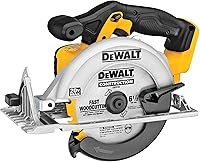
The DeWalt DCS391B is a bare-tool cordless saw. It runs a 5,150 RPM motor, a 6-1/2 inch blade and a 0 to 50 degree bevel, with a magnesium shoe and a rubber overmolded grip.
The battery and charger are sold separately.
The real cost question is whether you already own batteries from the same brand. If you do, the saw is a modest addition.
If you don't, budget for a battery and charger, which can push the total past a comparable corded saw.
What does the cordless design add for the money?
The 20V MAX platform is the reason the saw needs its own battery, and that battery is the single largest extra in the total. The magnesium shoe is a weight and durability feature: it keeps the saw light while staying strong enough for jobsite use.
The rubber overmolded grip is built for balance and control. The keyless blade change saves time when you swap a blade.
A 6-1/2 inch blade keeps the saw light and compact, but it also means less cut depth than a full-size 7-1/4 inch saw.
Our guide to how deep can a circular saw cut explains blade size and depth.
Which extras should you budget for?
Blades are the main extra, and cordless owners also budget for batteries and chargers. Most saws ship with a general-purpose carbide blade, which handles framing lumber and plywood.
A clean-cut blade for finish work or a blade for specialized material costs extra. Budget for one spare general-purpose blade so a dull edge doesn't stop a project.
Cordless buyers should price a second battery if the saw will run for long sessions.
The tooth count is worth noting when you plan a blade buy. A 24-tooth blade like the one in the Skil kit is a general-purpose pick for faster, rougher cuts.
Fewer teeth cut faster and leave a coarser edge, while more teeth cut slower and cleaner. The DeWalt DCS391B ships with an 18-tooth blade and the DWE575SB with a 15-tooth blade.
If your work leans toward finish cuts, a blade with more teeth is the first upgrade to price in.
Other extras are optional. A straight edge or guide rail helps long, straight cuts.
Safety gear such as glasses and hearing protection belongs in every budget. None of these changes the saw's tier, but each adds to the real cost of getting started.
Does a higher price mean a better cut?
Not by itself. A budget saw with a sharp blade can make clean cuts in softwood and sheet goods.
The blade does much of the work, so a dull blade on a premium saw cuts worse than a fresh blade on a budget model.
Higher tiers buy consistency and endurance. More power holds speed through thick or hard material.
A smoother base and finer bevel stops make repeated cuts more accurate. An electric brake and better dust control speed up the workflow.
Those features pay off when the saw runs daily.
The specs show where the money goes. The Skil runs at 5,300 RPM with a 51 degree bevel and a single positive stop.
The DeWalt DWE575SB runs at 5,200 RPM but adds an electric brake, a 57 degree bevel with stops at 45 and 22.5 degrees, and a depth of cut of 2-9/16 inch. The cordless DeWalt drops to a 6-1/2 inch blade and a 0 to 50 degree bevel.
A buyer comparing the three is really comparing how much precision and control they need, not raw speed.
For occasional projects, the budget tier plus a good blade covers most needs. For steady work, the mid-range and premium tiers earn their keep.
Match the tier to the workload, not to the label on the box.
How should you set your circular saw budget?
Decide your tier first, then add for blades and batteries. That order keeps the budget honest and stops a cheap saw from turning expensive once the extras land.
Start with how often you'll cut and what material you'll cut. Occasional softwood and sheet goods point to a budget corded saw.
Regular work in thicker or harder stock points to mid-range. Daily jobsite use points to premium.
If you work away from outlets, price the cordless saw plus a battery and charger before you compare it with a corded model.
Then add a spare blade and basic safety gear. For most readers, a budget or mid-range corded saw plus one spare blade is the sensible starting budget.
That covers how much does a circular saw cost without overbuying for a saw that sits in the garage.
Frequently asked questions
How much does a circular saw cost for a beginner?
A budget corded saw is the usual starting point for beginners. It gives you a full-size blade and a corded motor without paying for batteries.
Add a spare blade to your budget, since the included blade may be basic.
Is a cordless circular saw more expensive than a corded one?
Yes, when you count the battery and charger. A cordless saw sold as a bare tool costs less up front, but you need a compatible battery and charger from the same brand.
If you already own those, the total can be close to a corded saw.
What extras add to the cost of a circular saw?
Blades are the main extra. A general-purpose carbide blade is included with most saws, but clean-cut and specialized blades cost more.
Cordless owners also budget for batteries and chargers, and some buyers add a guide rail or straight edge.
Does a more expensive circular saw cut better?
Not always. A budget saw with a sharp, good blade can make clean cuts in softwood and sheet goods.
Higher tiers buy you more power, a smoother base, better bevel stops and longer motor life, which matter more for daily or heavy work.
How much should I budget for a circular saw?
Decide your tier first, then add for blades and, on cordless models, batteries. A budget saw plus one spare blade covers occasional DIY.
Mid-range or premium makes sense when the saw will see regular use or thick, hard material.