DeWalt DWE575SB vs DWE575: Corded Saw Comparison (November 2026)
The DeWalt DWE575SB is the better overall pick because it adds a 57° bevel capacity and electric brake. Choose the DWE575 for its lower listed weight and simpler design.
On this page (12 sections)
- DeWalt DWE575SB vs DWE575: what is the quick answer?
- How do the two DeWalt corded saws compare side by side?
- Which saw has the better bevel capacity?
- Does the electric brake make the DWE575SB better?
- Which saw is easier to handle?
- Which motor and cutting depth should you choose?
- How do cord protection and visibility compare?
- Who should buy the DeWalt DWE575SB?
- Who should buy the DeWalt DWE575?
- How should you use and care for either saw?
- Is the DWE575SB worth choosing over the DWE575?
- DeWalt DWE575SB vs DWE575: final verdict
The DeWalt DWE575SB wins the DeWalt DWE575SB vs DWE575 comparison for most people because it has a 57° bevel range and electric brake. The DWE575 is the lighter-handling choice according to its listed weight, while both saws use a 15 amp corded format and cut to 2 9/16 in.
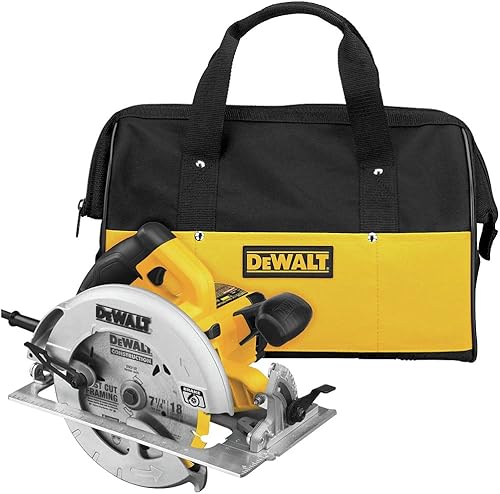
These saws are close in purpose. Each is a yellow DeWalt circular saw with a 7-1/4 in blade format, aluminum handle material, an aluminum base and a corded electric power source.
The main decision is not raw motor rating. Both have a 15 amp rating, so focus on bevel range, stopping control, listed weight and the type of cuts you make most often.

DeWalt DWE575SB vs DWE575: what is the quick answer?
Choose the DWE575SB for the better overall feature set; choose the DWE575 when lower listed weight matters more than the extra bevel range. The SB model adds a 57° bevel capacity and electric brake, while the DWE575 keeps the same 15 amp rating and 2 9/16 in depth of cut with a 53° bevel capacity.
The DWE575SB is listed at 8.8 lb. The DWE575 has conflicting weight information in the supplied product data: its bullets call it 8.8 lb, while its specifications list 5.6 lb.
That conflict makes the DWE575SB the clearer choice when weight is a central buying factor, because the comparison cannot treat the lower figure as certain.
Both models have an integrated dust blower that clears the line of sight while cutting. Both also use a durable high grade aluminum smooth base, which supports a steady path across the workpiece.
For a broader view of the two model names, read DeWalt DWE575 vs DWE575SB: What Actually Differs?. This comparison focuses on the buying decision between the exact products and their listed features.
How do the two DeWalt corded saws compare side by side?
The DWE575SB leads on bevel range and braking, while the DWE575 has the simpler lower-weight case. Their shared 15 amp rating and 2 9/16 in depth of cut keep the basic cutting range close.
| Feature | DeWalt DWE575SB | DeWalt DWE575 |
|---|---|---|
| Product name | DeWalt DWE575SB Corded Circular Saw | DeWalt DWE575 Corded Circular Saw |
| Blade format | 7-1/4 in circular saw blade | 7-1/4 in circular saw blade |
| Power source | Corded Electric | Corded Electric |
| Current rating | 15 A | 15 A |
| Bevel capacity | 57° | 53° |
| Bevel stops | 45° and 22.5° | 45° and 22.5° |
| Depth of cut | 2 9/16 in | 2 9/16 in |
| Listed speed | 5200 rpm | 4500 rpm |
| Listed weight | 8.8 lb | 5.6 lb in specifications, 8.8 lb in bullets |
| Dust control | Integrated dust blower | Integrated dust blower |
| Base | High grade aluminum smooth base | High grade aluminum smooth base |
The table shows why the DWE575SB earns the higher score. The DWE575 still covers common circular saw work, but the SB version gives you more bevel travel and a listed electric brake.
Which saw has the better bevel capacity?
The DWE575SB is the better choice for angled cuts because its bevel capacity reaches 57°. It also has positive stops at 45° and 22.5°, the same stop angles listed for the DWE575.
A 45° bevel is common for trim work, edge cuts and other angled tasks. Both saws reach that stop, so the DWE575 does not give up the most familiar bevel setting.
The extra 4° on the DWE575SB matters when your cut requires an angle beyond the DWE575's 53° range. It gives you a little more room before the bevel adjustment reaches its limit.
That advantage matters less if your work is almost entirely square cuts. For framing-style straight cuts, the two models share the same 2 9/16 in depth of cut, so the DWE575 can handle the main task without paying for a feature you rarely use.
The SB model also has a lower guard design that improves performance during bevel cuts and cutting shims. That makes its additional bevel range more useful for readers who regularly move between square and angled work.
Does the electric brake make the DWE575SB better?
Yes, the DWE575SB has the stronger stopping feature because its electric brake stops the blade after the trigger is released. That gives the SB model a clear control advantage in a busy cutting workflow.
A brake does not replace safe handling. Keep both hands and the saw body positioned as directed by the product instructions, keep the cord away from the blade path and wait for the blade to stop before setting the saw down.
The DWE575 product data lists brushless as a special feature, but it does not list an electric brake. The practical difference here is simple: the DWE575SB has the stated brake feature, and the DWE575 does not have that feature in the data.
This is one reason the SB model is the better fit for repeated cuts where you start, stop and reposition often. If you mainly make long cuts with fewer stops, bevel range and weight may matter more to your choice.
Which saw is easier to handle?
The DWE575 has the lighter handling case only if its 5.6 lb specification is accurate. Its product bullets also list 8.8 lb, so the DWE575SB's 8.8 lb figure is the clearer weight reference between these models.
Weight affects how the saw feels during setup, alignment and longer cutting sessions. A lighter tool is easier to hold in position, but a published weight conflict means you should not base the decision on the DWE575's lower figure alone.
The DWE575SB is described as lightweight and compact at 8.8 lb. It also has a 16.38 in length, 10.25 in width and 10.5 in height in its listed dimensions.
The DWE575 has listed dimensions of 16.25 in length, 10.13 in width and 8.94 in height. Those figures describe a slightly shorter and narrower footprint, with a lower listed height.
If storage space is tight, the DWE575's listed dimensions may fit your shelf more easily. For handling, use the exact packed and ready-to-use weight shown at the time you choose, since the supplied DWE575 data contains two different figures.
Which motor and cutting depth should you choose?
Both saws have a 15 amp rating and a 2 9/16 in depth of cut, so neither wins the basic power and depth comparison. Your choice should turn to the features that differ.
The DWE575SB has a listed speed of 5200 rpm. The DWE575 has a listed speed of 4500 rpm.
These figures belong to the specific product data, but speed alone does not tell you which saw is better for every material or cut.
Both models use a 7-1/4 in circular saw blade format. The DWE575SB includes a carbide tipped 7-1/4 in circular saw blade, blade wrench, user instruction manual and contractor bag.
The DWE575 includes a carbide tipped 7-1/4 in blade, blade wrench, instruction user manual and circular saw. Both products list a high grade aluminum smooth base, while the DWE575SB lists aluminum as the handle material.
A 2 9/16 in depth of cut gives both saws the same stated cutting depth. Choose by the stock you normally cut, then consider bevel range and stopping control rather than assuming the larger motor number will decide it.
How do cord protection and visibility compare?
Both saws support clear cutting with an integrated dust blower and cord protection features. The DWE575SB calls its system Tough cord protection and says it provides 3x durability against cord pull-out, while the DWE575 lists Toughcord for longer durability against cord pull-outs.
The dust blower helps clear the line of sight as you cut. That feature matters when dust collects along the intended cut and makes it harder to keep the base aligned.
The DWE575 also lists a clear line of sight that aids blade visibility from any angle. The DWE575SB lists its integrated dust blower and a lower guard design that improves performance during bevel cuts and shim cutting.
Keep the cord behind the saw and away from the blade path as you work. Route it before starting the cut, and avoid pulling the tool by the cord when moving between work areas.
For readers comparing a corded saw with a battery model, our guide to corded vs cordless circular saws explains how power access, work location and repeated cutting affect the choice.
Who should buy the DeWalt DWE575SB?
Buy the DeWalt DWE575SB if you want the strongest all-around feature set for bevel work, stopping control and repeated cuts. Its 57° bevel capacity, positive stops, electric brake and integrated dust blower make it the better match for a mixed cutting routine.
The DWE575SB also suits you if cutting shims or bevels is part of the job. Its lower guard design is specifically described as improving performance for those tasks.
The model includes a contractor bag, which gives you a named storage item for the saw and its listed accessories. Its 8.8 lb weight is clear in the product data, so it is still a compact corded saw even though the DWE575 has a lower conflicting figure.
Choose the DWE575SB when the difference between 53° and 57° could affect your work. The extra range costs nothing in planning once the saw is set up, but it gives you more room for less common angles.
Who should buy the DeWalt DWE575?
Buy the DeWalt DWE575 if your work is mostly straight cuts and you prefer its simpler feature set. It has the same 15 amp rating and 2 9/16 in depth of cut as the DWE575SB, plus a 53° bevel range with stops at 45° and 22.5°.
The DWE575 is also a reasonable fit when on-board blade wrench storage matters. Its product data specifically lists that storage feature, so the wrench has a named place on the saw.
The DWE575 has a listed speed of 4500 rpm and includes a carbide tipped 7-1/4 in blade, blade wrench, instruction user manual and circular saw. It also has an integrated dust blower, aluminum smooth base and Toughcord protection.
Do not choose it as the lighter model based only on the 5.6 lb specification. The bullets list 8.8 lb, so treat the weight comparison as unresolved and choose the DWE575 for its straight-cut focus and storage feature instead.
How should you use and care for either saw?
Set up either saw with a stable workpiece, a clear cut path and the cord routed away from the blade. The saw's base should sit flat on the material before the cut begins, and the lower guard should move freely as the saw enters the work.
Use the marked bevel setting that matches your cut. The DWE575SB reaches 57°, while the DWE575 reaches 53°, and both have stops at 45° and 22.5°.
Keep the line of sight clear while cutting. The integrated dust blower on both models helps clear dust, but it does not remove the need to keep your eyes on the cut and your hands in safe positions.
Disconnect power before changing the blade or using the blade wrench. Store the wrench with the tool, using the DWE575's on-board storage or the DWE575SB's listed contractor bag as appropriate.
Clean dust from the base and guard area with a suitable dry method. Keep the smooth aluminum base free of debris so it can move steadily across the workpiece.
Is the DWE575SB worth choosing over the DWE575?
Yes, the DWE575SB is worth choosing for most readers because it adds the more useful feature differences without changing the shared 15 amp, 7-1/4 in corded format. The DWE575 remains the better fit for simple straight cuts when its specific storage and listed dimensions appeal to you.
The DWE575SB wins on bevel capacity, electric braking, listed speed and bevel-cut support. The DWE575 wins on its on-board blade wrench storage and potentially lower handling weight, although the supplied weight data conflicts.
If you are comparing these with a cordless option, the DeWalt DCS590B review covers a brushless 7-1/4 in saw in a different power format. The DeWalt DCS391B review gives another point of comparison for a 20V circular saw.
DeWalt DWE575SB vs DWE575: final verdict
Pick the DeWalt DWE575SB as the overall winner in the DeWalt DWE575SB vs DWE575 decision. Its 57° bevel range, electric brake, 5200 rpm listed speed and lower guard support for bevel cuts give it the more complete set of features.
Pick the DWE575 when you mainly make straight cuts and value its on-board blade wrench storage. Its 15 amp rating, 2 9/16 in depth of cut, integrated dust blower and 53° bevel range keep it capable for common corded circular saw work.
The DWE575SB is the safer recommendation when you want one saw for square cuts, 45° bevels and less common angles. The DWE575 is the focused choice when the extra 4° and electric brake would rarely affect your work.
Frequently asked questions
Are the DeWalt DWE575SB and DWE575 the same saw?
They share a 7-1/4 in corded format, 15 amp rating and 2 9/16 in depth of cut, but their listed features differ. The DWE575SB has a 57° bevel capacity and electric brake, while the DWE575 has a 53° bevel capacity and a lower listed weight.
Which DeWalt saw has the larger bevel range?
The DWE575SB has the larger bevel range at 57°, with positive stops at 45° and 22.5°. The DWE575 has a 53° bevel capacity with stops at 45° and 22.5°, so the difference matters most when you need an angle beyond 53°.
Do both DeWalt saws use a cord?
Yes. Both models use a corded electric power source and have a 15 A current rating.
Plan your work around a suitable power connection and enough cord reach for the cut, while keeping the cord clear of the blade path.
Which model is better for straight cuts?
The DWE575 is enough for basic straight cuts when its 2 9/16 in depth of cut and 53° bevel capacity fit your work. The DWE575SB remains the stronger overall choice because the electric brake and extra bevel range add control beyond ordinary crosscuts and rip cuts.