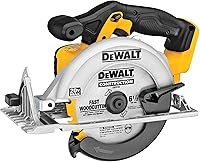
Are Circular Saws Left or Right Handed?
Most circular saws aren't sold as left or right handed. They're built blade-right or blade-left, and that motor-and-blade position, not your dominant hand, decides how the saw feels to use. Right-handed users usually prefer blade-right saws; left-handed users often prefer blade-left ones.
On this page (8 sections)
- Are circular saws left and right handed?
- What do blade-left and blade-right actually mean?
- Why do most circular saws sit blade-right?
- Which saws feel natural for left-handed users?
- How do you hold and guide a circular saw with either hand?
- What about corded and cordless saws?
- Does the blade side change how deep the saw cuts?
- Which circular saw should you buy for your dominant hand?
Most circular saws aren't sold as left or right handed. They're built blade-right or blade-left, and that motor-and-blade position, not your dominant hand, decides how the saw feels to use.
Right-handed users usually prefer blade-right saws; left-handed users often prefer blade-left ones.
That one design fact explains most of the confusion around circular saw handedness. The label on the box rarely says "left handed" or "right handed" at all.
Instead, you read the saw by where the blade sits and where your hands land.
Are circular saws left and right handed?
No, circular saws are not made as left or right handed tools in the way scissors or golf clubs are. The saw body is the same either way; what changes is the blade position and the handle layout.
That layout decides which hand feels natural on the trigger.
The phrase "left handed circular saw" is really shorthand for a blade-left saw. A blade-left saw puts the blade on your left as you hold the rear handle.
A blade-right saw puts it on your right. Neither is a different machine; both cut the same way.
So when you shop, ignore "handed" and read the blade side instead. A blade-right saw with a top handle feels normal in a right hand.
A blade-left rear handle saw feels normal in a left hand. The rest is grip and habit.
What do blade-left and blade-right actually mean?
Blade-right means the blade sits on the right side of the motor when you hold the saw in front of you. Blade-left means the blade sits on the left.
Most top-handle saws sold in the US are blade-right.
The blade side controls two things: where you see the cut line and where the offcut falls. On a blade-right saw, the blade is on the far side from a right-handed user, so the waste falls away from you.
On a blade-left saw, the blade is nearer a left-handed user's body.
Neither side is safer by itself. A sharp blade and a firm grip on the shoe matter far more than which side the motor sits on.
Blade side is a comfort choice, not a safety feature.
Why do most circular saws sit blade-right?
Most saws sold to home users are blade-right because most users are right-handed. A blade-right saw puts the blade on the outside of a right hand, so the saw body doesn't block the sight line as much.
That's the default the makers build to.
The blade-right layout also puts the offcut on the open side of the body for a right-handed user. The waste piece falls away from your arm and the cord stays behind you.
That's a small thing, but it adds up over a long cutting session.
Left-handed users get fewer options on the shelf. A blade-left saw is the natural mirror, and rear handle and worm drive models supply most of them.
That's why a left-handed buyer often looks at rear handle saws first.
Which saws feel natural for left-handed users?
Left-handed users usually feel most at home with a blade-left or rear handle saw. Those saws keep the blade and the cut line in view without reaching across the motor.
A rear handle saw is the classic example.
A rear handle design moves the main grip behind the motor. The blade sits forward and to the left, so a left hand on the trigger sees the line and pushes the saw away from the body.
It's the layout left-handed users ask for most often.
If you're left-handed and shopping for a corded saw, look at worm drive and rear handle models. For cordless options and blade-side detail, our guide to the best circular saws for woodworking covers the layouts worth checking.
The Makita XSR01Z runs on two 18V LXT batteries in an X2 setup and has a brushless motor rated at 5,100 RPM. Its 2-9/16 inch capacity at 90 degrees cuts 3X material in one pass.
The rear handle puts the blade on the left, so left-handed users get a clear sight line without reaching over the body.
If you mainly cut sheet goods and want a saw you can push in a straight line, this rear handle layout is the one to try in your dominant hand. See what else a saw like this can do in our guide to what a circular saw is used for.
How do you hold and guide a circular saw with either hand?
Grip the rear handle with your dominant hand and the front knob with the other. Your dominant hand runs the trigger and controls the push.
Your other hand steadies the shoe and keeps it flat on the work.
On a blade-right top-handle saw, a right-handed user stands to the left of the blade and pushes the saw forward. A left-handed user on the same saw stands more to the right and reaches across.
That reach is the main trade-off for left-handed users on blade-right saws.
On a blade-left rear handle saw, a left-handed user stands in the same comfortable spot a right-handed user gets on a blade-right saw. Right-handed users on blade-left saws face the mirror image of the same reach.
Whichever hand you use, keep both hands on the tool. Never reach into the blade path or hold the offcut by hand while the saw runs.
What about corded and cordless saws?
Blade side doesn't change with the power source; a cordless saw can be blade-right or blade-left just like a corded one. Corded and cordless saws are built in the same layouts.
The cord or battery only changes the balance and how the body sits in your hand.
Corded saws like the Skil 5280-01 are common blade-right top-handle models. A 15 Amp motor turning 5,300 RPM pushes a 7-1/4 inch carbide blade.
The top handle and blade-right shoe put the cut line on the far side for a right-handed user and on the near side for a left-handed one.
Cordless rear handle saws often mirror that blade-left layout. The Makita XSR01Z puts the blade on the left and the batteries at the rear.
Balance shifts with the two batteries on board, so try the saw in hand before you commit if hand position matters to you.
Our guide to the best circular saws for DIY projects covers both power types and the layouts each one tends to use.
Does the blade side change how deep the saw cuts?
No, blade-left or blade-right has no effect on cutting depth. Depth comes from the blade diameter and the shoe adjustment.
A 7-1/4 inch blade gives about the same maximum cut on either layout.
The worm drive Skilsaw SPT77WML-01 has a 7-1/4 inch blade and a cut-ready depth system for quick, accurate settings. Its blade sits on the left in the worm drive style.
The blade size sets the ceiling, not the side the motor sits on.
Depth also depends on the material and how far the blade is lowered past the work. For a full breakdown of blade size against cut depth, see our guide to how deep a circular saw can cut.
Which circular saw should you buy for your dominant hand?
For most right-handed users, a blade-right top-handle saw is the easy pick. For left-handed users, a blade-left rear handle saw keeps the sight line clear.
Pick the layout first, then match the power and blade to your work.
The Skilsaw SPT77WML-01 pairs a 15 Amp motor with magnesium construction and weighs 11.5 lb. Its 53 degree bevel covers a wide range of angled cuts, and the anti-snag lower guard helps with small cut-off pieces.
The worm drive and rear handle put the blade on the left.
If you cut mostly thinner sheet goods and trim and want a lighter saw, a blade-right top handle model like the Skil 5280-01 keeps the line in view for right-handed users. It uses a 15 Amp motor, a 7-1/4 inch blade and a 51 degree bevel with a positive stop at 45 degrees.
For most left-handed users, the rear handle blade-left layout is the better first saw. For most right-handed users, a blade-right top handle saw is the simpler, lighter choice.
Try both grips if you can, then buy the one that keeps your arm relaxed and your line in sight.
The blade position, not a "left handed" label, is what really matters when you decide are circular saws left and right handed. Read the blade side, hold the saw in your dominant hand, and pick the layout that lets you see the cut without reaching across the motor.
Frequently asked questions
Is a worm drive saw left or right handed?
A worm drive saw puts the blade on the left and the motor at the rear. That rear handle design is usually described as blade-left, so left-handed users tend to find it natural.
The Skilsaw SPT77WML-01 is a 15 Amp worm drive with that layout.
What is a rear handle circular saw?
A rear handle saw places the main grip behind the motor instead of on top. That pushes the blade forward and usually to the left, giving a long reach across sheet goods.
It suits users who want to push the saw through long rips in a straight line.
Which hand should hold a circular saw?
Hold the rear handle with your dominant hand and guide the front knob with the other. Your dominant hand controls the trigger and the push, and the other hand steadies the shoe and keeps it flat on the work.
Keep both hands on the saw and never reach into the blade path.