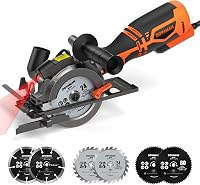
9 Best Circular Saws for Cutting Metal (November 2026)
The best circular saws set up for cutting metal include the Evolution 14BLADEST 14-Inch Mild Steel Blade for thick mild steel on a chop saw, the Evolution S185CCSL (best overall for metal cutting), and the DeWalt DCS391B 20V MAX Circular Saw (best cordless for mixed jobsite cutting).
On this page (6 sections)
The best circular saw for cutting metal is the Evolution S185CCSL, a 15 amp corded saw that ships with a 40-tooth TCT blade and cuts mild steel cool and clean. Its 2-1/2 in depth and 45 degree bevel cover most fabrication work, and its 11.4 lb body stays light enough for overhead cuts.
If you work across a site, the DeWalt DCS391B is the best battery-powered circular saw here for light steel and sheet. For thick mild steel on a chop saw, the Evolution 14BLADEST blade is the top pick.
The 6-1/2 in circular saw class matters here, because blade size sets how deep you can cut and how much power the saw needs. A metal setup changes both the blade and the saw speed.
Our picks at a glance
-
1
 Best for thick mild steel on a chop saw
Evolution 14BLADEST 14-Inch Mild Steel Blade
9.7/10 our score
See it on Amazon -
2

-
3
 Best cordless for mixed jobsite cutting
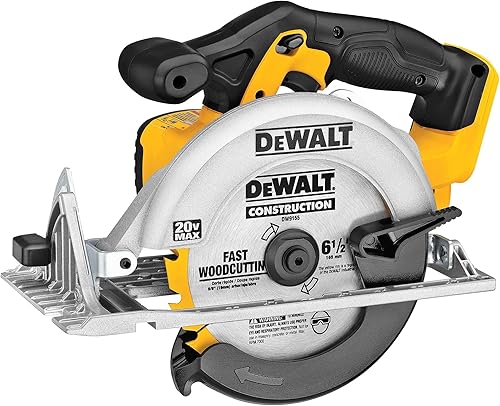
DeWalt DCS391B 20V MAX Circular Saw
8.9/10 our score
See it on Amazon
- 4
 Check it
HARDWIN 7-1/4 Inch Metal Cutting Blade
Best blade for structural steel - 5
 Check it
FOXBC 7-1/4 Inch Metal Cutting Blade
Best for stainless and mixed steel - 6
 Check it
DeWalt ATOMIC DCS571B 4-1/2 Inch Circular Saw
Best compact cordless for trim and pipe - 7
 Check it
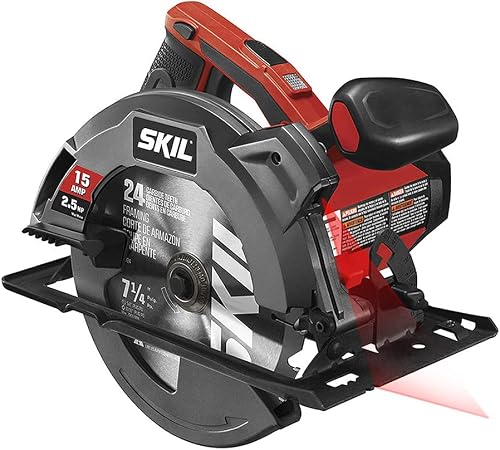
Skil 5280-01 15 Amp Circular Saw
Best budget base for a metal blade - 8
 Check it
Milwaukee 8-Inch Metal Cutting Circular Saw Blade
Best for thin ferrous sheet - 9
 Check it
Skil 5080-01 13 Amp Circular Saw
Best light corded saw for small shops
The best circular saws for cutting metal, by job
Each pick below is the best choice for one job, from heavy fabrication to quick trim work. The Evolution S185CCSL is the top pick for most metal work, while the blade-only picks let you turn a saw you already own into a metal cutter.
Our score weighs specs, features and how well each tool fits what a metal-cutting buyer needs. A blade earns its score on tooth count, arbor fit and RPM rating; a saw earns it on motor, depth and bevel range.
Evolution S185CCSL: Best overall for metal cutting
- 15 amp corded motor
- 7-1/4 in 40-tooth TCT blade
- 0-45 degree bevel
- 2-1/2 in cutting depth
- 11.4 lb
A corded 15 amp metal-cutting saw with a 40-tooth TCT blade, 45 degree bevel and a light 11.4 lb body for fabrication work.
Pros
- Clean, cool cuts in mild steel
- Light enough for overhead work
- Paddle levers for bevel and depth
Cons
- Corded only
- Needs an outlet near the work
The S185CCSL suits fabricators who cut angle iron, channel and metal roofing all day. Its 15 amp motor and 40-tooth TCT blade make dry cuts that stay cool to the touch, so you can handle an edge right after the pass.
Depth reaches 2-1/2 in, which covers most angle and channel stock, and the paddle levers move the bevel from 0 to 45 degrees without a wrench. A blade viewing window keeps the cutline in sight while channeled airflow clears chips.
The TCT teeth also mean the edges come out ready for welding, with no grinding step to remove a burr.
At 11.4 lb it sits among the lightest saws in its class, so overhead work and repeated cuts cost less fatigue. The 3700 RPM speed also stays within the range most 7-1/4 in metal blades expect.
The trade-off is the cord: you need an outlet within reach, and long runs across a site mean dragging a cord or adding an extension.
Buy it if most of your metal work happens near power and you want clean, weld-ready edges. A cordless saw is the better fit when you're moving between locations all day.
DeWalt DCS391B 20V MAX Circular Saw: Best cordless for mixed jobsite cutting
- 5150 RPM motor
- 6-1/2 in blade
- 0-50 degree bevel
- Magnesium shoe
- Tool only
A 20V cordless saw with a 5150 RPM motor and 50 degree bevel that takes a 6-1/2 in metal blade for light steel and sheet work.
Pros
- Runs on 20V MAX batteries
- Magnesium shoe holds accuracy
- Wide bevel range
Cons
- Battery and charger sold separately
- 6-1/2 in blade limits depth
The DeWalt DCS391B suits a crew already on the 20V MAX battery platform who needs metal cuts in the field. Its 5150 RPM motor spins a 6-1/2 in blade, so fit a metal-rated blade and the saw handles light steel and sheet without a cord.
The magnesium shoe keeps the base flat for steady cut depth, and the rubber overmolded grip helps balance in one hand. A 0 to 50 degree bevel range covers angled cuts in channel and trim, and the keyless blade change lets you swap a metal blade in without hunting for a wrench.
The 6-1/2 in blade is the real limit. It cuts shallower than the 7-1/4 in Evolution, so thick plate and deep channel need the corded saw.
Battery and charger are sold separately, which adds cost if you don't already own them. The 18-tooth blade it comes with is a wood blade, so a metal blade is a second buy.
Choose it for quick cuts away from an outlet. Stay with the Evolution S185CCSL when depth and steady power matter more than freedom from the cord.
HARDWIN 7-1/4 Inch Metal Cutting Blade: Best blade for structural steel
- 7-1/4 in, 48 cermet teeth
- 5/8 in arbor
- Thin kerf
- Anti-rust coating
A 48-tooth cermet blade built for rebar, angle iron, channel and pipe, with a thin kerf and a standard 5/8 in arbor.
Pros
- Cuts rebar, channel and pipe
- Thin kerf saves material
- Fits most corded and cordless saws
Cons
- Blade only, no saw included
- Wants a dedicated metal saw
HARDWIN's 7-1/4 in blade is the pick for structural steel: rebar, channel steel, angle iron, pipe and round bar. Its 48 cermet carbide teeth and thin kerf cut fast and waste less material than a grinding disc.
The cermet teeth run cooler than standard carbide, which keeps sparks down and limits discoloration on the cut edge. A laser-cut steel core and an anti-rust coating help it hold up through continuous work.
HARDWIN also builds in noise-reduction geometry, so the cut runs smoother with less vibration and a cleaner finish that needs less cleanup.
The standard 5/8 in arbor fits most corded and cordless circular saws. HARDWIN recommends pairing it with a dedicated metal-cutting saw for the best results, so a 15 amp saw like the Evolution S185CCSL is the natural host.
The blade comes in five sizes from 5-3/8 in to 14 in, so the same tooth style is available if your saw takes a different diameter.
This is a blade only. Budget for a saw if you don't own one, and skip it for stainless work where the FOXBC blade's rating fits better.
For wood jobs, keep a separate blade on hand and see our circular saws for cutting wood guide.
FOXBC 7-1/4 Inch Metal Cutting Blade: Best for stainless and mixed steel
- 7-1/4 in, 48 ceramic carbide teeth
- .075 in kerf
- 5/8 in arbor
- 5800 max RPM
- Diamond knockout
A 48-tooth ceramic carbide blade for steel and stainless, rated to 5800 RPM with stabilizer vents for straight, cool cuts.
Pros
- Works in steel and stainless
- High RPM rating
- Vents limit noise and vibration
Cons
- Blade only
- Thin stock needs care
FOXBC's 48-tooth blade covers steel and stainless steel in one blade. Fine grain ceramic carbide teeth hold their edge through high heat, and laser-cut stabilizer vents keep vibration down for straight cuts.
The .075 in kerf trims less material than a grinding disc. It's rated to 5800 RPM with a diamond knockout, so it fits cordless and corded saws within that speed limit.
FOXBC lists steel studs, angle iron, EMT conduit and all-thread as its targets. The maker also cites cooler cuts and longer life than a grinding disc in the same material.
The trade-off against the HARDWIN blade is thickness. FOXBC gives a wall thickness range of 1/16 in to 1/4 in for studs and tubing, and 1/8 in to 1/2 in for plate and bar.
Stock outside that band needs a different blade. The blade also fits the Diablo D0748CF set, so it slots into saws already set up for that blade.
Pick it when stainless is part of the mix. Pick the HARDWIN blade for heavy structural shapes and the Milwaukee blade for thin sheet.
DeWalt ATOMIC DCS571B 4-1/2 Inch Circular Saw: Best compact cordless for trim and pipe
- Brushless motor
- 4-1/2 in blade
- Bevel gear cuts 2x at 90 degrees
- 45 degree bevel
- Electronic brake
A 6.5 lb brushless compact saw with a 4-1/2 in blade, bevel gear, 45 degree bevel and a brake that stops the blade fast.
Pros
- Light and easy one-handed
- Blade brake for quick stops
- Cuts 2x lumber at 90 degrees
Cons
- Battery and charger sold separately
- Small blade for long steel runs
The DeWalt ATOMIC DCS571B suits trim, pipe and small steel cuts where a full-size saw feels clumsy. At 6.5 lb with a 4-1/2 in blade, it's the lightest saw in this group and easy to steer with one hand.
The brushless motor and bevel gear let it cut 2x material at 90 degrees and 1x at 45 degrees. An electronic brake stops the blade quickly, which matters when you set the saw down between metal cuts.
A removable auxiliary handle adds control for longer passes, and a hang hook keeps the saw within reach on a ladder or bench.
The 4-1/2 in blade is the limit. It won't match the Evolution's 2-1/2 in depth, so long runs in thick channel need the bigger saw.
Battery and charger are sold separately. The tool ships with a wood blade and a rip fence, so a metal blade is an extra buy.
Buy it for quick cuts in conduit and trim on a 20V MAX platform. Go with the S185CCSL when steel stock gets thick.
Skil 5280-01 15 Amp Circular Saw: Best budget base for a metal blade
- 15 amp motor, 5 300 RPM
- 7-1/4 in carbide blade included
- 51 degree bevel
- Single beam laser guide
- Dust blower
A 15 amp corded saw with 5 300 RPM, a 51 degree bevel and a laser guide, sold with a wood blade to swap for a metal one.
Pros
- Strong 15 amp motor
- Laser guide helps straight cuts
- Spindle lock for blade swaps
Cons
- Comes with a wood blade
- Not sold as a metal-cutting saw
The Skil 5280-01 is the budget route into metal cutting: buy a capable 15 amp corded saw and fit a metal blade. Its 5 300 RPM motor and 7-1/4 in blade size match the cermet blades above.
A single beam laser guide helps keep a straight line on long cuts, and the dust blower clears chips from the cutline. The 51 degree bevel with a positive stop at 45 degrees covers angled work.
A spindle lock makes blade changes quick when you switch from wood to metal. The kit also includes a wrench and a carry bag, so the saw is ready to move between jobs.
The saw ships with a 24-tooth carbide-tipped wood blade, so the metal blade is a separate buy. It also isn't sold as a metal-cutting saw, so the blade choice and speed check fall to you.
At 8.7 lb it's heavier than the Evolution, which matters on overhead work.
Choose it if you want one corded saw for wood and metal. Choose the Evolution S185CCSL if you'd rather buy a saw set up for metal from the start.
Woodworkers who split time between materials can read our circular saw for woodworking picks first.
Milwaukee 8-Inch Metal Cutting Circular Saw Blade: Best for thin ferrous sheet
- 8 in, 50 cermet teeth
- Hardened steel body
- Vibration dampening
- For ferrous metal 3/32 in and thinner
A 50-tooth cermet blade for ferrous metal 3/32 in and thinner, with a hardened body and damping for cool, burr-free cuts.
Pros
- Clean cuts in thin ferrous metal
- Damping lowers noise and heat
- Cuts aluminum too
Cons
- Blade only
- Limited to thin stock
Milwaukee's 8 in blade is the pick for thin ferrous sheet and aluminum. Its 50 cermet teeth cut ferrous material 3/32 in and thinner, with vibration dampening that reduces heat, sparks and noise.
The hardened steel body holds its shape through repeated cuts, and Milwaukee lists the blade for use with its dry cut saw. The cermet tips last longer than standard carbide in thin stock, where a coarse blade would grab and tear.
The damping is the feature that sets it apart here: less vibration means a smoother edge and less noise on long runs of sheet.
The 8 in diameter needs a saw that accepts it. That puts it outside the 6-1/2 in and 7-1/4 in saws above unless the saw's arbor and speed match.
The thin-stock limit also rules it out for thick plate. Milwaukee also lists aluminum as a material it cuts, so light sheet and ductwork in either metal are in range.
Buy it for sheet metal, ductwork and light aluminum. Buy the HARDWIN or FOXBC blade when your work runs to angle iron, channel or rebar.
Skil 5080-01 13 Amp Circular Saw: Best light corded saw for small shops
- 13 amp motor
- 7-1/4 in blade
- 51 degree bevel
- Spindle lock
- 7 lb
A 7 lb corded 13 amp saw with a 51 degree bevel and spindle lock, light enough to steer through short metal cuts with the right blade.
Pros
- Light for a corded saw
- Bevel stops at 45 degrees
- Spindle lock speeds blade changes
Cons
- Less power than 15 amp saws
- Comes with a wood blade
The Skil 5080-01 suits a small shop that wants a light corded saw for short metal cuts. At 7 lb it's easier to handle than the 15 amp models, and its 13 amp motor covers trim and light stock.
The 51 degree bevel with positive stops and the spindle lock cover angled cuts and fast blade changes. An improved dust blower keeps the cutline clear.
The saw includes an 18-tooth carbide blade and a blade wrench that stores on the tool. Skil also cut the weight about 15 percent against its older 5380 model, which is where the 7 lb figure comes from.
The 13 amp motor is the trade-off. It has less power than the 15 amp Evolution and Skil 5280-01, so long cuts in thick steel will bog down.
It also ships with a wood blade, so a metal blade is an extra buy. The 45 degree cutting angle and wood surface rating in its specs also mark it as a wood-first saw.
Pick it for light, occasional metal work where a lighter saw matters more than raw power. Heavy fabrication belongs with the Evolution S185CCSL.
Evolution 14BLADEST 14-Inch Mild Steel Blade: Best for thick mild steel on a chop saw
- 14 in diameter, 66 carbide teeth
- 1 in arbor, 1600 RPM
- .094 in kerf
- Mild steel only
A dry-cut TCT blade for mild steel on chop saws, rated to 1600 RPM with a thin kerf for cold, burr-free cuts.
Pros
- Thin kerf reduces waste
- Hardened body limits vibration
- Cuts stay cool to the touch
Cons
- Mild steel only
- Needs a low-speed chop saw
Evolution's 14BLADEST is the top-scoring pick here because it's built for the hardest metal job in this group: thick mild steel on a chop saw. Its 66 carbide teeth and .094 in kerf cut fast and leave a clean edge.
The Japanese carbide teeth are heat-treated for durability, and the hardened steel body limits vibration. Evolution says the blade produces virtually no sparks and leaves cuts cool enough to touch right away.
The 1 in arbor and 1600 RPM rating fit low-speed chop saws. The .094 in kerf is the detail that makes a difference on plate, since a thin cut wastes less stock and loads the motor less than a wide abrasive wheel.
The limit is material. Evolution specifies mild steel only, and warns against galvanized, hardened or high-carbon steel.
A buyer cutting stainless needs the FOXBC blade instead. The 14 in size also needs a saw built for it, so it won't go on the handheld saws here.
The blade weighs 16 ounces, light enough that it spins up quickly on a slow chop saw.
Choose it for structural steel on a chop saw. Choose a 7-1/4 in blade if your work happens on a handheld circular saw.
How these metal-cutting saws and blades compare
The table lines up power, blade size and depth so you can see which tool fits your stock. A blade row shows the saw you still need to supply.
| Product | Best for | Diameter | Teeth | Arbor | Our score |
|---|---|---|---|---|---|
| Evolution 14BLADEST 14-Inch Mild Steel Blade | thick mild steel on a chop saw | 14 in | 66 | 1 in | 9.7 |
| Evolution S185CCSL | overall for metal cutting | 9.1 | |||
| DeWalt DCS391B 20V MAX Circular Saw | cordless for mixed jobsite cutting | 8.9 | |||
| HARDWIN 7-1/4 Inch Metal Cutting Blade | blade for structural steel | 7-1/4 in | 48 | 5/8 in | 8.6 |
| FOXBC 7-1/4 Inch Metal Cutting Blade | stainless and mixed steel | 7-1/4 in | 48 | 8.4 | |
| DeWalt ATOMIC DCS571B 4-1/2 Inch Circular Saw | compact cordless for trim and pipe | 8.3 | |||
| Skil 5280-01 15 Amp Circular Saw | budget base for a metal blade | 8.1 | |||
| Milwaukee 8-Inch Metal Cutting Circular Saw Blade | thin ferrous sheet | 8 in | 50 | 8.0 | |
| Skil 5080-01 13 Amp Circular Saw | light corded saw for small shops | 7.7 |
How we compared these saws and blades
We started with the two ways to cut metal with a circular saw: a saw sold for metal cutting and a metal blade fitted to a general-purpose saw. The Evolution S185CCSL and the two DeWalt saws fit the first group, and the blade-only picks fit the second.
For saws, we weighed motor amps or voltage, blade size, cutting depth and bevel range. A 15 amp corded saw holds power through long cuts in thick steel; a 20V saw trades some depth for freedom from the cord.
We also looked at weight, since overhead work and repeated cuts reward a lighter tool. The Evolution's 11.4 lb and the DeWalt ATOMIC's 6.5 lb show how wide that spread runs in this group.
For blades, we checked tooth count, arbor size and RPM rating against the saws here. A 48-tooth 7-1/4 in blade in a 15 amp saw covers most steel jobs.
A 66-tooth 14 in blade needs a low-speed chop saw. The material limits each maker states decided which blade suits thick plate, structural shapes or thin sheet.
A blade rated for stainless moved up for mixed metal work, and one limited to thin ferrous stock moved down for plate jobs.
What should you check before buying a saw for metal?
Check the blade first, then the saw that spins it. Metal cutting depends on a blade rated for the material and a saw whose speed sits within the blade's limit.
A 7-1/4 in cermet blade at 48 teeth covers most steel work, and a 15 amp corded saw drives it through angle iron and channel.
Blade size and cutting depth
Blade size sets your depth. The Evolution S185CCSL cuts 2-1/2 in deep with a 7-1/4 in blade.
A 6-1/2 in saw cuts less, and a 4-1/2 in saw like the DeWalt ATOMIC cuts less again. Measure your thickest stock, then pick a saw whose depth clears it with a little margin.
The 14 in blade in this group runs on a chop saw, so its depth comes from the saw rather than a handheld base.
Motor power and cord or battery
A 15 amp corded motor holds speed through long cuts in thick steel. A 20V cordless saw runs free of an outlet but needs batteries and chargers you may not own.
If most of your work sits near power, the corded saw gives steadier results for the money. The brushless motor on the DeWalt ATOMIC adds efficiency, which stretches each battery charge across more cuts.
Bevel range for angled cuts
Bevel range decides whether you can cut channel and angle at an angle. The Evolution S185CCSL and the DeWalt ATOMIC both bevel to 45 degrees.
The DeWalt DCS391B goes to 50 degrees, and the Skil saws reach 51 degrees with a positive stop at 45. A positive stop is the detail to look for if you cut 45 degree corners often, since it returns to the angle without measuring.
Teeth and material ratings
Tooth count and the maker's material list decide what a blade will cut. A 48-tooth blade in 7-1/4 in handles steel and stainless in some cases.
Evolution's 14BLADEST is mild steel only. Milwaukee's 8 in blade covers ferrous metal 3/32 in and thinner.
FOXBC gives explicit wall and plate thickness ranges. Match the blade's stated material to your stock before you buy.
Blade speed limits
The blade's RPM rating must sit at or above your saw's no-load speed. The 14BLADEST is rated to 1600 RPM for chop saws.
FOXBC's 7-1/4 in blade is rated to 5800 RPM. A blade run faster than its rating can fail, so check the number on the blade against the saw before the first cut.
This matters most when you fit a metal blade to a wood saw, since many wood saws spin faster than a metal blade allows.
Safety and dust control
Metal cutting throws sparks and chips. Wear eye and hearing protection, and keep the cutline clear.
A dust blower or viewing window helps you see the line. The DeWalt ATOMIC adds an electronic brake that stops the blade quickly when you release the trigger.
A blade with vibration dampening, like the Milwaukee, also cuts down on noise and hand fatigue over a long run.
Which circular saw setup fits your metal work?
Pick the saw first for a dedicated metal station, or the blade first if you already own a saw. The Evolution S185CCSL is the best circular saw for cutting metal when you want one tool set up and ready.
For fabrication shops cutting thick steel
Go corded. The Evolution S185CCSL's 15 amp motor and 40-tooth TCT blade cut mild steel cool and clean, and its 2-1/2 in depth covers angle and channel.
For thick plate on a chop saw, the 14BLADEST blade's 66 teeth and 1 in arbor do the heavy work at 1600 RPM.
For crews moving between sites
Go battery. The DeWalt DCS391B spins a 6-1/2 in blade at 5150 RPM with a 0 to 50 degree bevel, so it handles light steel and sheet without a cord.
The DeWalt ATOMIC DCS571B at 6.5 lb suits quick cuts in conduit and trim with a brake for fast stops.
For mixed wood and metal work
Go with a general-purpose saw and two blades. The Skil 5280-01's 15 amp motor and 5 300 RPM suit a 7-1/4 in metal blade, and its laser guide helps straight lines.
The lighter Skil 5080-01 at 7 lb covers short metal cuts in a small shop. Our battery powered circular saw picks cover the cordless side.
For thin sheet and aluminum
Go with a fine-tooth blade. Milwaukee's 8 in blade cuts ferrous metal 3/32 in and thinner and also handles aluminum, with damping that lowers noise and sparks.
It needs a saw that accepts the 8 in diameter and matches its arbor and speed.
Verdict: which circular saw is best for cutting metal?
The Evolution S185CCSL is the best circular saw for cutting metal for most buyers, with a 15 amp motor, a 40-tooth TCT blade and a 2-1/2 in depth that covers most steel work. Buy the DeWalt DCS391B when you need battery power in the field.
Buy the Evolution 14BLADEST when thick mild steel on a chop saw is the job.
If you already own a circular saw, the HARDWIN or FOXBC 7-1/4 in blade turns it into a metal cutter for far less than a new saw. Match the blade to your stock: cermet teeth for structural shapes, finer teeth for thin sheet and stainless.
A woodworker adding metal work should keep separate blades for each material and change them between jobs. See our best circular saws for woodworking and 6-1/2 in circular saw guides before you buy a second saw.
Our top 3 picks at a glance
-
1
Best for thick mild steel on a chop saw
Evolution 14BLADEST 14-Inch Mild Steel Blade
9.7/10 our score
See it on Amazon -
2
-
3
Best cordless for mixed jobsite cutting
DeWalt DCS391B 20V MAX Circular Saw
8.9/10 our score
See it on Amazon
Frequently asked questions
Can a regular circular saw cut metal?
Yes, if you fit a blade rated for the metal and set the saw's speed within the blade's limit. A general-purpose wood blade is not safe for steel.
A 15 amp corded saw with a 7-1/4 in cermet blade handles light steel, and a cordless saw does the same job in thinner stock.
What speed should a circular saw run for cutting metal?
Run the saw at or below the blade's rated RPM. The Evolution 14BLADEST is rated to 1600 RPM for chop saws, while the FOXBC 7-1/4 in blade is rated to 5800 RPM.
Check the blade's number against your saw's no-load speed before the first cut.
How many teeth do I need for cutting metal?
A 48-tooth blade in 7-1/4 in covers most steel work, from angle iron to pipe. The 40-tooth TCT blade on the Evolution S185CCSL handles mild steel in daily fabrication.
A 66-tooth 14 in blade suits thicker plate on a slow chop saw.
Can I cut stainless steel with a circular saw?
Yes, with a blade rated for stainless and a saw speed inside its limit. The FOXBC 7-1/4 in blade lists stainless steel as a compatible material and is rated to 5800 RPM.
Go slowly and let the blade do the work so the steel stays cool.
Is a corded or cordless circular saw better for metal?
A corded saw gives steady power for long cuts in thick steel. The Evolution S185CCSL runs on a 15 amp cord for fabrication work.
A cordless saw like the DeWalt DCS391B suits quick cuts in the field, provided you own the batteries and chargers.
How deep can a metal-cutting circular saw cut?
The Evolution S185CCSL cuts up to 2-1/2 in deep, enough for most angle iron and channel. Saw depth shrinks with blade size, so a 6-1/2 in saw cuts less than a 7-1/4 in model.
Measure your thickest stock before picking a saw.